Event 1
World War II
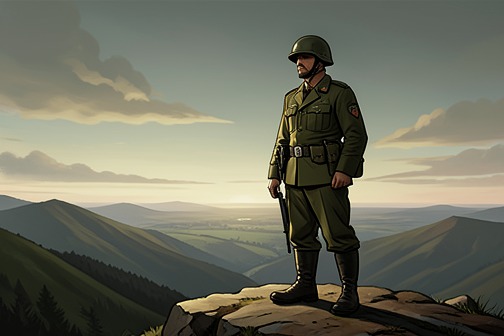
[World War II](entity:event-recall-event-world-war-ii-6434f354548b) is the central rupture linking [Josef Mengele](entity:character-recall-character-josef-mengele-a0cc1adb6ff1)’s service in the Nazi state, his work at [Auschwitz concentration camp](entity:location-recall-location-3c4eaac5dda5), and his postwar flight across Europe and South America. The book presents the war not only as a military conflict but as the setting for competing political ambitions, organized persecution, and crimes whose consequences persisted long after [Germany](entity:location-recall-location-a3c24dd56e42)’s defeat. Its aftermath appears in the fugitives’ new identities, the slow movement of extradition requests, and survivors’ continuing demands for justice.
## War, ideology, and political ambition
The war also forms part of [Juan Perón](entity:character-recall-character-a454ccbc4368)’s political education. Before [Argentina](entity:location-recall-location-27e2c37f5c3d)’s postwar ambitions took shape, Perón studied Fascism and war, traveled in [Italy](entity:location-recall-location-125be658b0d0) and Germany, and admired the disciplined state he encountered under [Adolf Hitler](entity:character-recall-character-adolf-hitler-e6e3f1777476). His account of Germany’s revival under Nazism treated its political and military organization as a model of national power. In Italy, he watched [Benito Mussolini](entity:character-recall-character-0c59129db009) address a crowd from the balcony of the Palazzo Venezia as the country entered the war in 1940.
After returning to Argentina, Perón interpreted the conflict as a contest in which Fascist Italy and Nazi Germany offered an alternative to both communism and capitalism. He imagined Argentina taking the place of the defeated Axis powers and emerging as a third force in a future struggle between the [United States](entity:location-recall-location-5d55e9152db1) and the Soviet Union. The war’s end therefore did not close this political story: in Perón’s vision, defeat left behind materials and opportunities from which a new national project might be built.
## Mengele’s military and medical career
Josef Mengele’s wartime record, as he recites it to [Eberhard Fritsch](entity:character-recall-character-412fe7cad995) in [Buenos Aires](entity:location-recall-location-buenos-aires-f4be140f43ae), combines military service with Nazi racial policy. He said that he joined the [Nazi Party](entity:organization-recall-organization-bddabb00303b) in 1937 and entered the association of Nazi doctors and the SS the following year. After service in the Tyrolean Alpine Hunter Corps, he volunteered for the [Waffen-SS](entity:organization-recall-organization-waffen-ss-0cbf0cb9658c) and worked as a medical expert in the [SS Race and Resettlement Main Office](entity:organization-recall-organization-4674853c5910) in occupied [Poland](entity:location-recall-location-8e143713a3f3). He later served as a medical officer with [SS Division Wiking](entity:organization-recall-organization-5-bb512a9bf1f7) on the Eastern Front after Operation Barbarossa, including postings in Ukraine and participation in the Caucasus offensive and fighting near Rostov-on-Don and Bataysk. He also described rescuing two tank crewmen from a burning vehicle and receiving the Iron Cross First Class.
That account was selective. Mengele spoke of transfer to a prison camp in Poland but withheld the name [Auschwitz](entity:location-recall-location-auschwitz-5b34fe0799d2) from Fritsch, presenting himself as an exiled soldier grieving for his country and its lost uniform. The narrative sets this self-presentation against evidence of his work at Auschwitz concentration camp. In 1944, deported Hungarian Jews arrived in multiple trainloads each day; as camp physician, Mengele made selections that sent people either to forced labor or to their deaths. His authority in that process was exercised repeatedly, not as an isolated episode but as part of the camp’s routine.
The account of [Miklós Nyiszli](entity:character-recall-character-bb2a0f1377d7), a Jewish physician and Sonderkommando prisoner forced to assist Mengele, further connects the camp’s medical work to Mengele’s research. Nyiszli describes painful experiments on twins and the compilation of case files, with research materials sent to the Berlin institute directed by [Otmar von Verschuer](entity:character-recall-character-otmar-von-verschuer-c3db6a00b1f4). Even in autumn 1944, when Germany had already lost the war, Mengele continued spending long hours in the dissection room and laboratory. Nyiszli’s recollections make the contrast stark: meticulous attention to dossiers and scientific procedures existed within a system organized around persecution and killing. He later recorded his experience in a book first published in Hungary in 1946 and in France in 1961.
## Defeat, flight, and the postwar refuge
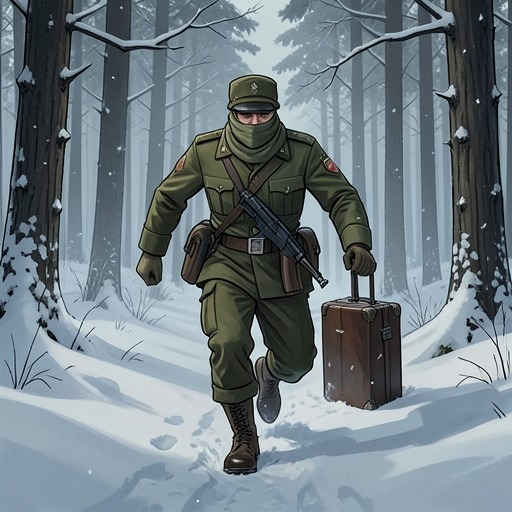
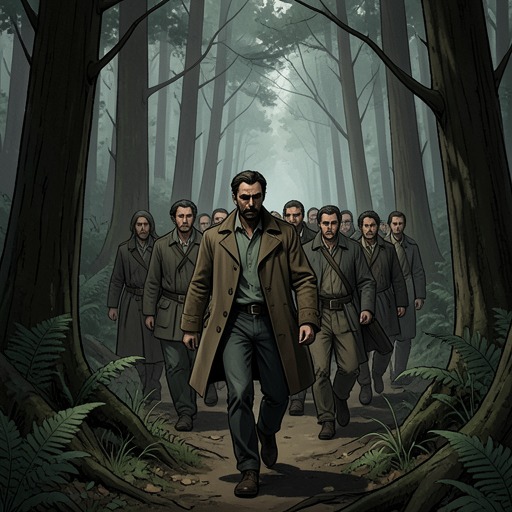
As the German defeat approached, Mengele fled Poland in January 1945 disguised as a [Wehrmacht](entity:organization-recall-organization-cc339bc483cd) soldier. His route through the immediate postwar years involved successive identities and jurisdictions: a few weeks in an American prisoner-of-war camp, release using false papers in the name Fritz Ullmann, and three years in hiding on a farm in [Bavaria](entity:location-recall-location-26327aadd938) near [Günzburg](entity:location-recall-location-d9821256f60f), where he worked under another name. At Easter 1949 he crossed the Dolomites by forest paths into [South Tyrol](entity:location-recall-location-e2058807165c), adopted the name Helmut Gregor, and traveled from [Genoa](entity:location-recall-location-73f077d9952a) to Buenos Aires. By the time he arrived, the war had ended, but evasion depended on the movement of people, documents, money, and assistance across borders.
The book links that escape to a broader postwar willingness in [West Germany](entity:location-recall-location-eebe13eb20e5) to set aside prosecutions. In a letter to Mengele, his father reported that war-crimes proceedings had been suspended and former Nazis were taking important positions in government and industry. He urged his son to forget the war and look toward reconstruction. The political logic of the Cold War, as the letter presents it, helped recast former Nazis as useful participants in a new order, even as Mengele remained wanted for mass murder.
## Pursuit and the long afterlife of the war
Efforts to bring Mengele to trial exposed the obstacles created by borders and official delay. [Hermann Langbein](entity:character-recall-character-c8355742e994), an Auschwitz survivor who had helped found the [International Auschwitz Committee](entity:organization-recall-organization-914594915b64), gathered evidence and passed the case to West German authorities. After most judges declined to act, a prosecutor in [Freiburg im Breisgau](entity:location-recall-location-35ea022d2af8), Mengele’s last registered address, issued an arrest warrant on 25 February 1959 for multiple counts of premeditated murder and attempted murder. The next steps depended on extradition requests to Argentina and [Paraguay](entity:location-recall-location-780df61f9f8b), where procedure, jurisdiction, and political protection repeatedly slowed the pursuit.
By November 1959, Paraguay had granted Mengele citizenship, a residence permit, a certificate of good behavior, and an identity card, despite the legal problem that citizenship required five years of residence. In 1960, [Isser Harel](entity:character-recall-character-1b6747f7f230) planned to pursue Mengele after the operation to capture [Adolf Eichmann](entity:character-recall-character-adolf-eichmann-2d7ccb92d0d6), but the intelligence available to him was scattered and outdated. Later West German efforts likewise met resistance: Paraguay’s government rejected extradition pressure, disputed claims about Mengele’s location, and invoked its sovereignty. In 1964, while the [Frankfurt Auschwitz trials](entity:action-recall-action-frankfurt-auschwitz-tr-8b7a52a76492) drew international attention, West Germany publicly renewed pressure and offered a reward. The pursuit nevertheless faltered amid diplomatic conflict and political calculations.
The war’s history returned to public view with survivor testimony. At a 1985 mock trial at [Yad Vashem](entity:location-recall-location-9a3f0eb52346), survivors of Mengele’s experiments testified over three days; their accounts were broadcast internationally and prompted renewed calls to arrest him. The trials, investigations, and rewards did not undo the crimes or end the fugitive’s concealment. They did, however, challenge the postwar distance that had allowed Mengele to present himself as a displaced former soldier. In the book’s account, World War II remains present through that unresolved contrast: the perpetrator’s continued evasion and the survivors’ insistence that the crimes be named and judged.
Event 2
The Holocaust
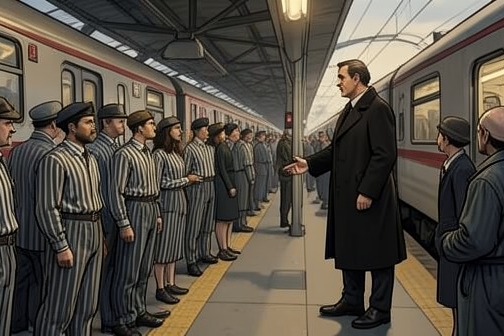
[The Holocaust](entity:event-recall-event-holocaust-6538c5c3f4d7) was a systematic campaign of persecution and mass murder that the account traces from the machinery of [Auschwitz](entity:location-recall-location-auschwitz-5b34fe0799d2) to the prolonged struggle over evidence, responsibility, and public memory. Its central contrast is between a process that reduced people to categories and instruments of policy, and the testimony that restored individual experience to a history its perpetrators and defenders sought to deny.
## Deportation and the system of selection
The account describes Auschwitz as a place where arrival meant immediate classification. On the ramp, [Josef Mengele](entity:character-recall-character-josef-mengele-a0cc1adb6ff1) directed people to different fates: some were sent to forced labor, while others were selected for immediate killing. The procedure was presented as a routine act of authority, carried out amid the arrival of transports from across Europe. In 1944, according to the testimony of [Miklós Nyiszli](entity:character-recall-character-bb2a0f1377d7), several trainloads of deported Hungarians could arrive in a day, and Mengele spent long periods at the selection point.
This sorting was connected to a larger system of exploitation. Prisoners who were considered capable of work were subjected to forced labor; people designated as unsuitable were murdered. The account also links the camps to the interests of German industry, describing prisoners as exploited in pharmaceutical laboratories and their deaths as part of a wider structure that served institutions beyond the camp itself. This was not merely a sequence of isolated acts: deportation, selection, labor, and killing operated as connected parts of organized policy.
The language of [racial hygiene](entity:expression-recall-expression-racial-hygiene-a20f12a070b9) supplied a claimed rationale for the violence. Mengele treated human beings as material for research into heredity, twins, and the imagined improvement of a population. The account identifies this as an ideological project, not a legitimate scientific enterprise: its procedures depended on the coercion and destruction of the people made subject to them. The distance between the abstract language of biological improvement and the human consequences of the system is one of the narrative’s defining tensions.
## Mengele’s work and the testimony of Nyiszli
Nyiszli, a Jewish doctor forced to serve the camp’s medical operations, recorded what he witnessed after surviving Auschwitz. The account presents him as a coerced participant in the dissection and examination of victims, and his testimony documents the scope of Mengele’s experiments on twins and other prisoners. These procedures included repeated tests and the use of prisoners’ bodies as research material; some experiments ended in death. The record makes clear that the claimed scientific purpose did not mitigate the crimes or the absence of consent.
Nyiszli’s recollections emphasize the persistence of Mengele’s work even as [Germany](entity:location-recall-location-a3c24dd56e42) was losing the war. He describes the doctor spending long hours examining case records and conducting research, with a meticulous concern for the files he had assembled. That attention to paperwork and scientific routine sits in stark opposition to the killing around him. The account does not treat administrative precision as evidence of detachment or innocence: it shows how professional habits and institutional procedure could be turned toward an inhuman purpose.
The experiments were tied to a wider academic network. Organs and other research material were sent to the institute directed by [Otmar von Verschuer](entity:character-recall-character-otmar-von-verschuer-c3db6a00b1f4) in Berlin, with packages marked urgent and important for the war effort. The transfer of material from Auschwitz to an institute outside it shows how the camp’s violence could be connected to research institutions through correspondence, shipments, and professional relationships. The perpetrators’ vocabulary of science did not stand apart from the camp system; it helped organize and transmit its results.
## Denial, exposure, and the limits of postwar accountability
After the war, the existence and scale of the crimes became the subject of public argument. Books, articles, and documentaries brought the camps to wider attention, while the film Night and Fog and the growing readership of The Diary of Anne Frank contributed to a changing public understanding. The account sets this development against resistance in [West Germany](entity:location-recall-location-eebe13eb20e5), where efforts at reconciliation could also suppress or defer confrontation with the Nazi past.
In [Buenos Aires](entity:location-recall-location-buenos-aires-f4be140f43ae), members of the Dürer men’s club denied the accepted figure of six million Jewish victims and promoted a far lower estimate. They portrayed accounts of the killing centers as fabricated history and treated [Adolf Eichmann](entity:character-recall-character-adolf-eichmann-2d7ccb92d0d6) as a possible authority who could restore Germany’s reputation. Yet when [Eichmann](entity:character-recall-character-588289c1f970) was interviewed over six months by [Willem Sassen](entity:character-recall-character-ae62f029513e) and [Eberhard Fritsch](entity:character-recall-character-412fe7cad995), he confirmed the scale and methods of the extermination program, including mass killings, gas chambers, forced labor, death marches, and famine. His admissions unsettled the men who had expected confirmation of their denials. The book was cancelled, although Sassen kept the recordings; the episode exposed the conflict between ideological loyalty and evidence supplied by a perpetrator himself.
Legal efforts to pursue former camp personnel developed slowly and across borders. [Hermann Langbein](entity:character-recall-character-c8355742e994), a former prisoner of Dachau and Auschwitz, gathered evidence against Mengele and passed case files to German authorities. On 25 February 1959, a prosecutor in [Freiburg im Breisgau](entity:location-recall-location-35ea022d2af8) issued an arrest warrant charging Mengele with multiple cases of premeditated murder and attempted murder. But the search depended on cooperation among governments, while extradition requests moved through complicated procedures and faced political obstruction. In [Paraguay](entity:location-recall-location-780df61f9f8b), Mengele obtained citizenship in 1959; later, President Stroessner refused to cooperate with West German efforts to secure his return. The account thus shows how jurisdiction, national sovereignty, and delay could protect a fugitive even when investigators had assembled evidence against him.
## Pursuit, rumor, and the construction of a fugitive legend
The search for Mengele became entangled with competing accounts of where he lived and how close his pursuers had come. In 1960, Mossad director [Isser Harel](entity:character-recall-character-1b6747f7f230) planned to use the operation to capture Eichmann as an opening for a subsequent attempt to seize Mengele. That plan depended on limited, outdated information and a narrow window of time. Later accounts of Mengele’s supposed movements—from South American cities to remote military zones—often exceeded what investigators could verify.
[Simon Wiesenthal](entity:character-recall-character-simon-wiesenthal-4091b241cfc6) helped keep the case before an international audience, but the book distinguishes his public influence from the reliability of particular stories. After Eichmann’s trial and execution, Wiesenthal devoted substantial effort to the search for Mengele and publicized dramatic accounts of near captures and escapes. The narrative notes that some of these stories were embellished and that Wiesenthal’s asserted knowledge of Mengele’s location was uncertain. His storytelling sustained attention on a fugitive who might otherwise have disappeared from public concern, while also blurring the line between documented pursuit and legend. That tension matters: the continuing public image of Mengele as elusive could draw attention to his crimes even as it made the historical record harder to separate from rumor.
## Survivor testimony and public memory
In 1985, survivors who had been subjected to Mengele’s experiments returned to the public record. At the fortieth anniversary of Auschwitz’s liberation, a group of survivors, including twins and people who had been singled out for experimentation, called for his capture. Their appeal insisted that the passage of time had not ended the demand for justice.
A mock trial at [Yad Vashem](entity:location-recall-location-9a3f0eb52346) in [Jerusalem](entity:location-recall-location-695056030a63) brought testimony before an international audience. Over three days, survivors described experiments on twins, attempts to manipulate reproduction, and the deliberate deprivation imposed on mothers and infants. The account records testimony about the lasting anguish of those events without making the survivors’ suffering a spectacle. Their statements gave particular human consequences to a history often obscured by totals, official terminology, and the perpetrators’ claims of duty.
The testimony had immediate consequences. Broadcast around the world, it renewed pressure on governments to find Mengele. A review of a declassified American intelligence memorandum—incorrectly suggesting that the [United States](entity:location-recall-location-5d55e9152db1) had held him in 1947—also prompted questions about whether former Nazi criminals had been allowed to escape accountability. The United States, [Israel](entity:location-recall-location-e1a1566e26c9), and West Germany resumed or coordinated efforts, and rewards for his capture rose sharply. The mock trial did not substitute for a criminal prosecution, but it made survivor testimony central to the renewed search and challenged the long interval in which a man accused of mass murder had remained free.
Event 3
The 1944 Holocaust of Hungarian Jews
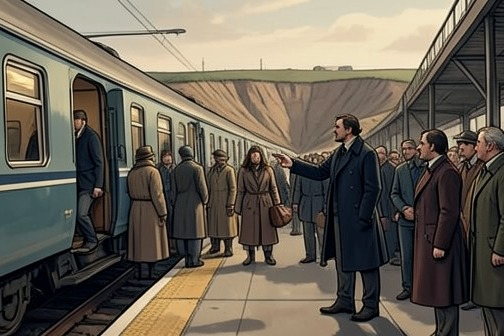
[The 1944 Holocaust of Hungarian Jews](entity:event-recall-event-1944-05ecad64083c) at [Auschwitz](entity:location-recall-location-auschwitz-5b34fe0799d2) was a rapid, organized campaign of mass murder in which more than 320,000 Hungarian Jews were killed in less than eight weeks. The account places the scale of the crime beside [Josef Mengele](entity:character-recall-character-josef-mengele-a0cc1adb6ff1)’s role in selections and experiments, and later traces how survivor testimony and public denial shaped the long effort to make the perpetrators answer for it.
## Deportations and the scale of killing
During the summer of 1944, Auschwitz received 440,000 Hungarian Jews. Its gas chambers were operating at full capacity; open-air burning pits were also used as the killing system strained under the number of people arriving. More than 320,000 Hungarian Jews were exterminated in under eight weeks. The figures give the pace and magnitude of the crime, while the account’s focus on individual routines shows how the machinery of murder was carried out amid the ordinary rhythms of camp life.
Mengele spent long periods at the Judenrampe, where four or five trainloads of deported Hungarians arrived each day. He directed the incoming convoys through the selection process, sending people either to forced labour or to immediate death. The account presents this not as an impersonal procedure but as an action repeatedly performed by a physician whose decisions helped determine who would live and who would be killed.
## Medicine and the machinery of murder
[Miklós Nyiszli](entity:character-recall-character-bb2a0f1377d7), a Jewish doctor forced to work for Mengele, later recorded the camp’s medical crimes. A prisoner assigned to the Sonderkommando, Nyiszli was compelled to assist with examinations and dissections. In the barracks of the Gypsy camp, Mengele’s experiments included tests on twins and dwarves, among them blood tests, spinal taps, and transfusions between twins. The procedures were painful and exhausting; when Mengele wanted to compare the subjects’ bodies, he arranged for twins to be killed together. Their deaths were not incidental to the work: they were built into its design.
The experiments were connected to research beyond Auschwitz. Organs were sent to the [Kaiser Wilhelm Institute for Anthropology, Human Heredity and Eugenics](entity:organization-recall-organization-4978afc86af7) in Dahlem, Berlin, directed by [Otmar von Verschuer](entity:character-recall-character-otmar-von-verschuer-c3db6a00b1f4). The account notes that packages were marked as urgent war material, showing how the camp’s violence could be transmitted through the language and logistics of scientific research. Mengele’s work thus joined direct authority over prisoners to a wider institutional network that received the results.
Nyiszli also described Mengele’s continued presence in the dissection room in autumn 1944, when [Germany](entity:location-recall-location-a3c24dd56e42) had already lost the war. Mengele examined case files and specimens for hours. Even a faint grease mark on a dossier cover drew his attention: he had carefully collected the records and objected to their careless handling. The contrast is stark. An exacting concern for the preservation of files coexisted with the destruction of the people whose lives those files recorded.
## Private life alongside atrocity
The account recalls that Mengele’s wife, [Irene Mengele](entity:character-recall-character-219a43ef8ef4), joined him at Auschwitz in the summer of 1944. Their son, [Rolf](entity:character-recall-character-9bf3df2a7266), had been born a few months earlier, and she showed Mengele photographs of the baby. Despite the mass deportations and killings, the couple spent what the narrative describes as an idyllic period together: they swam in the Sola and picked blueberries, which Irene made into jam. Domestic intimacy did not interrupt the extermination around them; the two realities occupied the same place and time.
That contrast returns in a later recollection of the autumn of 1944. In [Buenos Aires](entity:location-recall-location-buenos-aires-f4be140f43ae), Mengele lies ill and remembers an earlier period of exhaustion, when the Soviet advance had made it clear that the war was lost. Irene had helped him recover then, as she had stood by him when he nearly collapsed in Auschwitz. The memory of her care and of their life together is set against the scale of the killings in which he had played an active role. The juxtaposition exposes the distance between his private self-image and the consequences of his work.
## Testimony, denial, and the pursuit of justice
After the war, public knowledge of the murder of European Jews grew through books, articles, and films. In 1956, Alain Resnais’s documentary Night and Fog had a profound impact, while The Diary of Anne Frank drew an expanding readership. The account contrasts this emerging public record with organized denial: the Dürer men’s club rejected the figure of six million Jewish victims, minimized the number to 365,000, and denied the use of poison-gas chambers and the mass killing of Jews. Denial recast evidence of extermination as a conspiracy and sought to restore the reputation of Nazi Germany.
The pursuit of Mengele developed across borders and through hesitant institutions. After [Hermann Langbein](entity:character-recall-character-c8355742e994) gathered evidence, a prosecutor in [Freiburg im Breisgau](entity:location-recall-location-35ea022d2af8) issued an arrest warrant on 25 February 1959, charging Mengele with multiple cases of premeditated murder and attempted murder. Langbein pressed for an extradition request to [Argentina](entity:location-recall-location-27e2c37f5c3d), where Mengele was believed to be living, but the process encountered jurisdictional obstacles and official delay. The warrant marked a legal response to the crimes, though it did not bring Mengele into custody.
In 1985, survivors renewed the demand for accountability. At a mock trial at [Yad Vashem](entity:location-recall-location-9a3f0eb52346) in [Jerusalem](entity:location-recall-location-695056030a63), former prisoners testified about Mengele’s experiments, including those conducted on twins and the abuse of mothers and newborns. Their accounts were broadcast internationally and prompted renewed pressure to locate and arrest him. The testimony connected the public record to the experiences of those who had survived: decades after the killings, their words challenged both the earlier denials and the fugitive’s continued absence from court.
Event 4
Liberation of Auschwitz
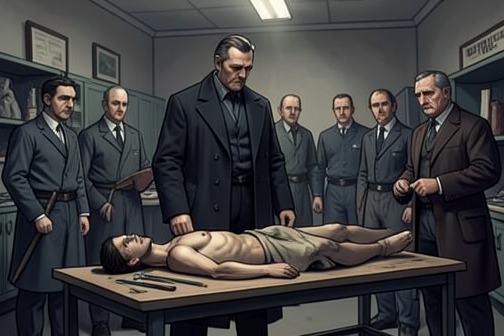
The liberation of [Auschwitz](entity:location-recall-location-auschwitz-5b34fe0799d2), marked on January 27, 1945, is a turning point in the book’s account of the camp and a recurring date in the struggle to preserve evidence of its crimes. The narrative gives little description of the liberation itself; instead, it traces what the date comes to signify through survivor testimony, postwar investigations, and delayed efforts to bring [Josef Mengele](entity:character-recall-character-josef-mengele-a0cc1adb6ff1) to justice.
## The Camp and Its Crimes
In 1944, physician [Miklós Nyiszli](entity:character-recall-character-bb2a0f1377d7), himself a Jewish prisoner and one of the [Sonderkommando prisoners](entity:character-recall-character-ba46e8a23e45), was forced to assist Mengele with examinations and research on prisoners. Nyiszli later recorded his experience in *Auschwitz: A Doctor’s Eyewitness Account*, first published in Hungary in 1946 and in France in 1961. His account describes Mengele’s presence at selections of deported Hungarians and his involvement in experiments on twins and other prisoners. It also records how camp medical work and killing were bound together, rather than separate activities.
Nyiszli’s testimony depicts Mengele continuing his work in the dissection room in autumn 1944, even as [Germany](entity:location-recall-location-a3c24dd56e42) was losing the war. Mengele’s attention to the organization of research files stands in stark contrast to the violence and death surrounding the work. The book uses this contrast to show how scientific procedure and meticulous record-keeping could operate within, and serve, a system of persecution and murder.
The later fate of the research materials further connects individual crimes to institutions beyond the camp: organs were sent to the Institute for Anthropology, Human Heredity and [Eugenics](entity:concept-recall-concept-eugenics-f4f27050613a) in Dahlem, Berlin, directed by Professor [Otmar von Verschuer](entity:character-recall-character-otmar-von-verschuer-c3db6a00b1f4). This evidence complicates any account that treats the camp’s crimes as the acts of an isolated individual. Mengele’s conduct belonged to a wider network of research and institutional interests, even though the account identifies his own decisions and actions within that system.
## Liberation and the Struggle to Establish Responsibility
Liberation did not, in the narrative, bring an immediate end to the struggle over accountability. Nyiszli’s book carried testimony across national borders and into the postwar period, while investigations into Mengele proceeded slowly. [Hermann Langbein](entity:character-recall-character-c8355742e994), an Auschwitz survivor who had served as personal secretary to the camp’s chief doctor, Eduard Wirths, pursued evidence that Mengele had survived and was living in [Buenos Aires](entity:location-recall-location-buenos-aires-f4be140f43ae). Langbein’s investigation led to an arrest warrant issued in [Freiburg im Breisgau](entity:location-recall-location-35ea022d2af8) on February 25, 1959, on multiple counts of premeditated murder and attempted murder.
The pursuit was also impeded by jurisdictional delays and political hesitation. After the warrant, the West German authorities sought extradition through [Argentina](entity:location-recall-location-27e2c37f5c3d), while Mengele’s associates helped him flee to [Paraguay](entity:location-recall-location-780df61f9f8b). In November 1959, Paraguay granted him citizenship and related documents. The book presents these developments as a stark contrast to the demand for justice raised by survivors: the passage of time and the crossing of borders made prosecution more difficult, while Mengele continued to rely on assistance and protection.
## Anniversary, Testimony, and Public Memory
On January 27, 1962, the seventeenth anniversary of the liberation, a newspaper photograph of Mengele drew [Gitta Stammer](entity:character-recall-character-gitta-stammer-c78940b5388e)’s attention to the resemblance between the fugitive and the man living under an assumed identity in her household. The anniversary thus appears not only as a date of remembrance but also as the circumstance in which his identity was recognized. The discovery led to his confession to the Stammers that he was Mengele, though he denied the crimes reported in the press.
The fortieth anniversary, on January 27, 1985, brought survivors back to Auschwitz. Among them were people who had been subjected to Mengele’s experiments, including twins, dwarves, and people with disabilities. They appealed publicly for governments to capture him. In February, a mock trial at [Yad Vashem](entity:location-recall-location-9a3f0eb52346) in [Jerusalem](entity:location-recall-location-695056030a63) heard testimony over three days. The testimony described the treatment of prisoners and the harm inflicted on mothers and children; it transformed individual recollections into a public record before an international audience.
The mock trial had immediate consequences for the renewed pursuit. The [United States](entity:location-recall-location-5d55e9152db1) attorney general called for the case file to be reviewed, and the Israeli authorities announced that they would resume the hunt and offer a reward. The [Simon Wiesenthal Center](entity:organization-recall-organization-e2f1edecbaa6) and the Washington Times also offered rewards, while [West Germany](entity:location-recall-location-eebe13eb20e5) added one of its own. A declassified American memorandum claiming that the United States had held Mengele in 1947 was incorrect, but its circulation provoked renewed scrutiny of how Nazi fugitives had escaped accountability.
## Significance
The book presents liberation as both a historical event and a continuing reference point for testimony. January 27 links the end of the camp’s operation to later acts of recognition, commemoration, and public accusation, without suggesting that remembrance by itself secured justice. Nyiszli’s postwar account, Langbein’s investigation, the survivors’ 1985 testimony, and the international response show how evidence had to be preserved and repeatedly brought before institutions capable of acting on it.
The contrast between the survivors’ demands and the prolonged protection and evasion surrounding Mengele gives the anniversary its particular force. The date marks liberation, but the narrative’s account of its later commemorations also measures the distance between the defeat of the camp system and the pursuit of those responsible.
Event 5
Juan Perón wins the 1946 Argentine presidential election
[Juan Perón](entity:character-recall-character-a454ccbc4368)’s victory in the 1946 Argentine presidential election followed his removal from office, arrest, and return to the centre of national politics through mass mobilization. The election established the Peróns as [Argentina](entity:location-recall-location-27e2c37f5c3d)’s rulers and brought to power a coalition spanning the church, military, nationalists, and proletariat. In the book’s account, the result marks the start of a project that promised national renewal while also helping create the political environment in which Nazi fugitives would later find Argentina comparatively accommodating.
## From Removal to Return
Before the election, Perón had risen to become secretary of war and vice president. His political ascent included sharply increased military spending, the creation of an air force, and a radio warning of a Brazilian attack that never took place. Under pressure from the [United States](entity:location-recall-location-5d55e9152db1) to hold democratic elections at the end of the war, Argentina’s military leadership became divided. In September 1945, renewed conservative opposition and conflict between officers culminated in Perón’s forced resignation and arrest.
His opponents’ success proved temporary. Workers, unionists, and other underprivileged supporters mobilized under the leadership of the [General Confederation of Labour](entity:organization-recall-organization-7d7ecdd04e37). They marched to May Square in [Buenos Aires](entity:location-recall-location-buenos-aires-f4be140f43ae) and called for Perón’s release and restoration to power in front of the presidential palace. Perón married [Eva Perón](entity:character-recall-character-0c162c10b3d2), and a few months later he won the presidential election. The sequence joins street mobilization to electoral victory: the arrest that was meant to remove him instead became the immediate prelude to his return.
## A Coalition and a Political Project
By 1946, the Peróns had become the masters of Argentina, backed by the church, military, nationalists, and proletariat. Their victory rested on a broad alliance rather than a single constituency, and the account presents the election as the point at which that alliance became national power. Perón’s appeal drew on promises to end humiliation and dependency and to offer a new beginning to the masses he addressed by radio.
The government announced an aesthetic and industrial revolution and a proletarian regime. Perón’s public rhetoric cast him as a saviour and promised Argentina a place in history through Peronist Justicialism. The scale of the promise matters to the election’s significance: victory was framed not simply as a change of officeholders, but as the beginning of a transformation of the country’s political and social order.
## The Election’s Later Consequences
The book connects the Peronist period to the later flight and concealment of Nazi fugitives without reducing those events to the election alone. When [Josef Mengele](entity:character-recall-character-josef-mengele-a0cc1adb6ff1) faced an arrest warrant and possible extradition, he feared that Argentina’s newly elected liberal government might prove less lenient toward Nazis than its Peronist and military predecessors. That concern helped prompt his flight to [Paraguay](entity:location-recall-location-780df61f9f8b). The contrast makes the election’s aftermath visible in retrospect: a change of government altered the fugitive’s calculation of where he could remain safe.
After [Adolf Eichmann](entity:character-recall-character-adolf-eichmann-2d7ccb92d0d6)’s kidnapping, Argentina faced international pressure to demonstrate that it was not a sanctuary for Nazis. The book describes that crisis as a humiliation for the country and a turning point in the pursuit of war criminals. The 1946 victory is therefore situated within a longer political arc: it inaugurated Perónist rule, while later shifts in government and mounting international scrutiny changed the conditions under which fugitives and their protectors operated.
Event 6
Peronist mass mobilization of October 17, 1945
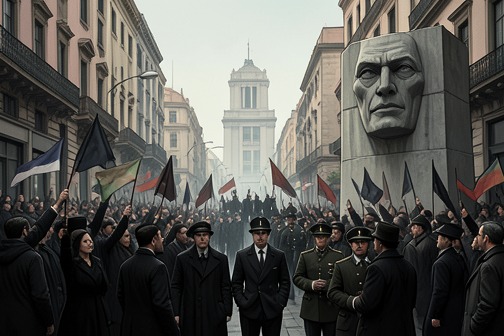
The [Peronist mass mobilization of October 17, 1945](entity:event-recall-event-1945-10-17-4b8486e62ee0), brought workers, unionists, and underprivileged supporters into the streets of [Buenos Aires](entity:location-recall-location-buenos-aires-f4be140f43ae) to demand [Juan Perón](entity:character-recall-character-a454ccbc4368)’s release and return to power. Organized under the leadership of the [General Confederation of Labour](entity:organization-recall-organization-7d7ecdd04e37), the march answered his arrest by military opponents and became the decisive public demonstration in the immediate struggle over his political future.
## Political Crisis and Perón’s Arrest
Perón had risen within the military government to become secretary of war and vice president. He increased military spending, created an air force, and made a radio broadcast warning of a Brazilian military attack that never occurred. At the end of the [Second World War](entity:time-recall-time-second-world-war-80275f3e28b5), the [United States](entity:location-recall-location-5d55e9152db1) pressed the military junta to hold democratic elections, while renewed conservative opposition sharpened divisions among [Argentina](entity:location-recall-location-27e2c37f5c3d)’s officers.
In September 1945, a mass demonstration marked the escalation of that opposition. More liberal officers displaced nationalists, and Perón’s military opponents forced him to resign and arrested him. The arrest transformed an internal military conflict into a public contest: his supporters now had to make their demand for his return visible beyond the junta and its rival factions.
## The March to May Square
Supporters mobilized in response, with the General Confederation of Labour leading workers, unionists, and people described as underprivileged toward May Square in Buenos Aires. They gathered in front of the presidential palace and called for Perón’s release and return to power. The march thus connected organized labor to a broader popular constituency, turning the question of one arrested official into a mass political demand.
The mobilization’s force lay in the contrast between Perón’s removal by opponents inside the military and the public pressure exerted by those who supported him. The account presents the demonstration as a collective intervention in the crisis, rather than as a decision made within government alone. The march did not itself settle every institutional question, but it made the demand for Perón’s restoration impossible to treat as merely an internal military matter.
## Aftermath and Political Significance
Perón married [Eva Perón](entity:character-recall-character-0c162c10b3d2) in the aftermath of the mobilization and won the presidential election a few months later. The sequence links the march to his return to national political prominence: first came his supporters’ demand for release and restoration, then his marriage, and then electoral victory. The evidence does not detail the intervening negotiations, but it establishes the broad outcome of the crisis.
The event’s significance in the book rests on the political weight of organized popular action. A coalition led by labor unions carried its demand directly to the presidential palace, helping shift the balance after Perón’s arrest and resignation. His subsequent election gave that confrontation a national consequence, making the October mobilization a turning point in the emergence of Perón’s presidency.
Event 7
Korean War
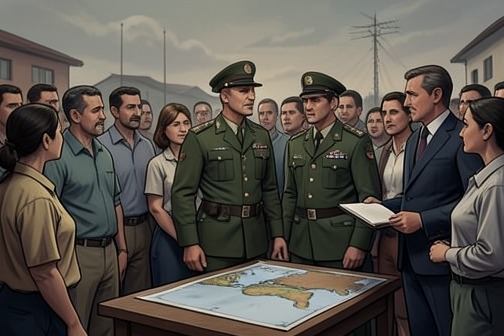
The [Korean War](entity:event-recall-event-edfba50ab7e2)’s outbreak on 25 June 1950 became, in [Buenos Aires](entity:location-recall-location-buenos-aires-f4be140f43ae), more than news from a distant front: fascist circles treated it as a possible opening to a Third World War, while [Juan Perón](entity:character-recall-character-a454ccbc4368) watched the crisis for signs of a larger geopolitical upheaval. When the front stabilized, that prospect receded, and Perón turned his attention to consolidating power at home.
## Outbreak and Buenos Aires
The war began on 25 June. Less than three weeks later, on 14 July, [Adolf Eichmann](entity:character-recall-character-adolf-eichmann-2d7ccb92d0d6) arrived in Buenos Aires under the name Ricardo Klement. He stayed only briefly before Fuldner found him work at Capri, a public company building hydroelectric plants in Tucumán Province. The account places [Eichmann](entity:character-recall-character-588289c1f970)’s arrival alongside the war’s outbreak, establishing the international crisis as part of the political atmosphere into which Nazi fugitives were arriving, without suggesting that the conflict caused his move.
By the end of 1950, the fascists of Buenos Aires were euphoric. They imagined that a third world war was close, and Perón monitored telexes with the possibility of escalation in view. Tensions in Korea supplied the immediate focus for these expectations.
## The prospect of escalation
The crisis was sharpened by public statements and military proposals from the [United States](entity:location-recall-location-5d55e9152db1). President Truman promised to use the full American arsenal against the North Korean offensive in the South. [Douglas MacArthur](entity:character-recall-character-c7123e3c80fa) went further, proposing a belt of radioactive cobalt between the Yellow Sea and the Sea of Japan to prevent Chinese and Soviet entry into the combat zone. These developments made the conflict appear to the Buenos Aires fascists as a possible threshold to a much wider war, rather than a contained regional struggle.
Their hopes belonged to a wider restorationist outlook. The Dürer men’s club rejected the democracy imposed by the Allies and sought to reconquer the Fatherland. Its members followed news and read Der Weg, believing that Germans had not abandoned Nazism and that reports of the camps’ atrocities were not widely believed. The Korean crisis did not create this outlook, but it gave its adherents a new occasion to anticipate a reversal of the postwar order.
## Stabilization and political reversal
MacArthur was relieved of his command in the Far East, and the front stabilized. The expected escalation did not arrive. Perón raged as the imagined age of the centaur and the Third World War were postponed; with his grand ambitions thwarted, he redirected his efforts toward a triumphant re-election.
That turn coincided with a strengthening of the regime. Defamation of the authorities was prohibited, national newspapers were censored, and La Prensa was closed, expropriated, and transformed into an instrument of the [General Confederation of Labour](entity:organization-recall-organization-7d7ecdd04e37). Military personnel doubled, propaganda intensified, dissidents were imprisoned, and parliamentarians sought refuge in Montevideo. Perón also offered the vice presidency to his wife, [Eva Perón](entity:character-recall-character-0c162c10b3d2), recruiting her to help secure his electoral victory. The war’s stabilization thus marks a narrative pivot: expectations of international upheaval give way to intensified domestic control.
## Narrative significance
The Korean War functions in the account as a measure of how political ambitions attach themselves to events beyond their control. Buenos Aires fascists interpreted the conflict through hopes of recovering a lost order, while Perón’s expectation of global transformation collapsed with the stabilization of the front. The contrast between the imagined world war and the actual consolidation of authority at home gives the episode its significance: when the external crisis failed to deliver the change they anticipated, political energy was redirected inward.
Event 8
Death of Eva Perón
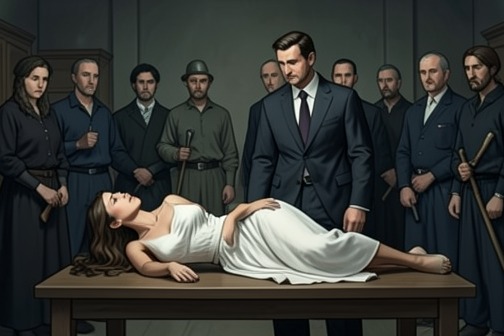
[Eva Perón](entity:character-recall-character-0c162c10b3d2)’s death from uterine cancer became more than a private loss: [Argentina](entity:location-recall-location-27e2c37f5c3d)’s mourning, the preservation and disappearance of her body, and the effort to erase her public legacy made her a continuing political presence after her death.
## Death and Public Mourning
By the end of 1953, Argentina was still described as grieving Eva Perón’s death from uterine cancer. That mourning formed part of the political atmosphere in which [Juan Perón](entity:character-recall-character-a454ccbc4368)’s government and its opponents were understood: her absence did not make her influence disappear, and her memory remained attached to the public life of the country.
## An Embalmed Body and a Political Legacy
Juan Perón had Eva’s body embalmed. The preservation of her remains gave her death a material afterlife, even as her husband’s political position grew increasingly precarious. When Perón’s government fell and he went into exile, Eva’s corpse disappeared. The account leaves the disappearance as a stark fact, without resolving where her body went at that point.
## The Campaign Against Her Memory
After Perón’s departure, the new authorities sought to purge the country of Peronist associations. The measures reached beyond political offices and public speech: Eva’s foundation was closed, its sheets were burned, its cutlery was melted down, and statues of the couple were toppled. Objects belonging to Eva and Juan Perón, including mopeds and ornaments, were put on display as evidence of their alleged vice and greed. The campaign also altered names: places associated with Perón were renamed, and girls called Evita changed their first names. Eva’s disappearance from public commemoration was therefore pursued alongside the disappearance of her body.
## Significance
The event’s consequences unfold through a contrast between mourning and attempted erasure. Eva’s death was followed by the preservation of her body, its disappearance after the change of regime, and the destruction or renaming of objects and institutions tied to her. In this account, her posthumous presence is carried not only by public grief but by the state’s efforts to suppress the symbols through which that grief and political attachment could be expressed.
Event 9
Peronist mass rally of August 22, 1951
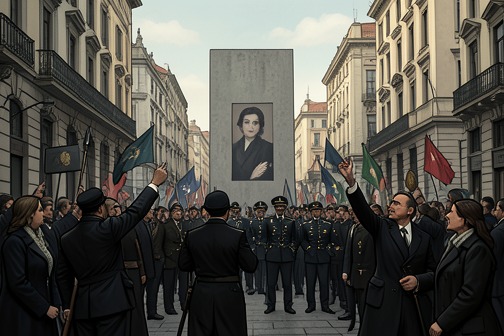
The [Peronist mass rally of August 22, 1951](entity:event-recall-event-1951-8-22-367ac4110339), turned a planned announcement of candidacies into a public confrontation over [Eva Perón](entity:character-recall-character-0c162c10b3d2)’s political future. Hundreds of thousands gathered in [Buenos Aires](entity:location-recall-location-buenos-aires-f4be140f43ae), and their insistence that she accept the vice-presidential nomination transformed the spectacle of popular support into an unmistakable demand addressed to the leadership itself.
## Setting and Political Stakes
The rally took place on the city’s broadest avenue, where [Juan Perón](entity:character-recall-character-a454ccbc4368) and Eva Perón were expected to announce their candidacies. The crowd arrived marked by Peronist emblems on their jackets and gathered before the official platform. Juan Perón stood with his arms crossed as Eva appeared to a tumultuous welcome: supporters waved flags and handkerchiefs, torches and firecrackers marked the celebration, and confetti fell from surrounding balconies.
The scale of the gathering followed months of heightened public devotion to Eva. Crowds had been seeking her out at the Ministry of Labour and the headquarters of her foundation, whose budget had increased tenfold. Her image appeared on campaign posters across Buenos Aires, while banners on 9 de Julio Avenue called for a ticket joining Juan Perón with Eva as an emblem of the homeland. The rally brought this established adulation into a formal political decision: whether she would stand for the vice presidency.
## The Crowd Presses for an Answer
When the secretary-general of the [General Confederation of Labour](entity:organization-recall-organization-7d7ecdd04e37) asked the crowd to proclaim Eva’s candidacy, she took refuge in Juan Perón’s arms and asked for time to consider. Her request for four days met with consternation. She then sought a shorter delay, but the crowd continued to insist. For eighteen minutes, people chanted her name and demanded an answer.
The exchange made the gathering more than a ceremonial endorsement. Eva tried to postpone her decision; the assembled crowd treated that delay as unacceptable and pressed her to respond. She swayed and wept before announcing that she would give her decision on the radio that evening. The rally thus ended without an immediate acceptance, but with the public exerting unmistakable pressure on the person whose candidacy it had been asked to acclaim.
## The Nazi Observers’ Reading
[Uli Rudel](entity:character-recall-character-ab858e1ef571) and his companion Gregor left before the gathering had run its course. They were repelled by the crowd and judged its exuberance against their own ideal of political obedience, contrasting the scene with [Hitler](entity:character-recall-character-943a651bff95)’s [Germany](entity:location-recall-location-a3c24dd56e42). To them, the rally exemplified what they saw as Juan Perón’s theatrical dictatorship: a politics of spectacle in which public acclamation did not necessarily mean disciplined obedience. Their contempt also reflected their own racist and authoritarian outlook, not a neutral account of the people assembled.
That perspective shaped their broader criticism of Peronism. They regarded its promises of international unity and its political appeals to compassion as signs of weakness, and dismissed its ambitions as empty or fanciful. The rally therefore presents two sharply opposed ways of interpreting mass politics: for the supporters, the gathering made their demand visible and audible; for the Nazi observers, the same public participation appeared undisciplined and absurd.
## A Private Rumor Amid the Public Spectacle
After they had left the crowd, Rudel confided to Gregor a highly confidential rumor: Eva was very ill. He suggested that, if the report were true, their political ally was in serious trouble. The account presents this as an unverified private report, not as a fact established at the rally. Set against the public display of Eva’s energy and the crowd’s insistence on her political future, the rumor introduces uncertainty into the event’s apparent triumph.
Event 10
Bombing of Plaza de Mayo on June 16, 1955
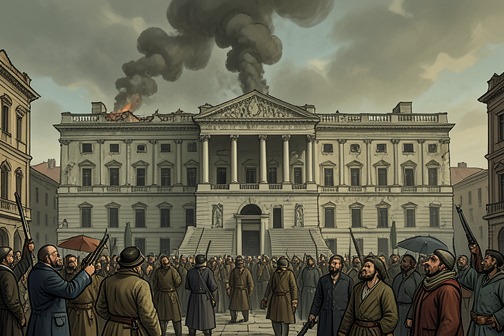
The bombing of the presidential palace and May Square on June 16, 1955, was a failed coup attempt against [Juan Perón](entity:character-recall-character-a454ccbc4368) that exposed the mounting instability of his rule. Perón survived, but the attack formed part of a broader confrontation that culminated in his resignation and flight from [Argentina](entity:location-recall-location-27e2c37f5c3d) in September.
## Background: Opposition to Perón
By June 1955, anti-Peronist military leaders known as the Gorillas were challenging Perón’s government. The Church had become a refuge for opposition to him, amid disputes over his policies toward religious schools, divorce, prostitution, and religious sects. Political life was marked by demonstrations and counter-demonstrations, while hostility between Peronists and their opponents deepened.
## The Bombing
On June 16, the military leaders bombed the presidential palace and May Square. Perón escaped the coup attempt. The account identifies the targets and the survival of the president, but gives no figures for casualties or a fuller description of the attack; its emphasis is on the political crisis that surrounded the bombing and its place in the unraveling of Perón’s government.
## From Failed Coup to Perón’s Fall
The bombing did not remove Perón from power, but his position was increasingly precarious. In the months that followed, violence and counter-revolution intensified. By September, mutinies had broken out in Córdoba and Bahía Blanca, and the navy blockaded [Buenos Aires](entity:location-recall-location-buenos-aires-f4be140f43ae) and threatened the refineries. Perón resigned and escaped to [Asunción](entity:location-recall-location-39e0c1a43904) aboard a Paraguayan gunboat. The June bombing thus stands as an early, dramatic episode in the crisis that ended his rule, rather than as its conclusion.
Event 11
Liberating Revolution
The [Liberating Revolution](entity:event-recall-event-3b47268c7d1d) was the military overthrow of [Juan Perón](entity:character-recall-character-a454ccbc4368) in September 1955 and the campaign to eradicate Peronism that followed. It transformed [Argentina](entity:location-recall-location-27e2c37f5c3d) from a refuge whose political order had offered Nazi fugitives room to maneuver into a more uncertain environment, prompting [Josef Mengele](entity:character-recall-character-josef-mengele-a0cc1adb6ff1) to reconsider his safety while leaving the country’s capacity to pursue him far from assured. The revolution’s significance lies both in the force of its domestic purge and in the gap between political rupture and effective cross-border justice.
## Crisis and overthrow
The confrontation developed amid mounting violence. On 16 June 1955, anti-Peronist military leaders known as the Gorillas bombed the presidential palace and May Square. Juan Perón survived, but the attack marked a deepening crisis. By September, mutinies had broken out in Córdoba and Bahía Blanca; on 16 September, the navy blockaded [Buenos Aires](entity:location-recall-location-buenos-aires-f4be140f43ae) and threatened the refineries. With civil war looming, Perón resigned and escaped aboard a Paraguayan gunboat bound for [Asunción](entity:location-recall-location-39e0c1a43904). A military junta took power, but its first leader was soon displaced by [Pedro Eugenio Aramburu](entity:character-recall-character-27f91a2a4702), who pledged to purge the country of Peronism.
The change of government did not immediately produce a settled political order. The first general was deposed within weeks, and Aramburu’s administration made the overthrow a campaign against the defeated movement’s public presence. The military victory therefore reached beyond the removal of Perón: it sought to make Peronism difficult to name, display, or preserve in everyday life.
## The purge of Peronist symbols
Aramburu’s government prohibited public displays of images and sculptures of Juan Perón and his deceased wife, as well as the use of Peronist names and expressions. Violations could bring prison sentences. Union leaders were arrested, thousands of officials dismissed, and places bearing Perón’s name—from cities and streets to stations, squares, and stadiums—were renamed. The campaign also entered private and personal life: girls named Evita were made to change their first names.
The material remains of the former government were treated as targets of public erasure. [Eva Perón](entity:character-recall-character-0c162c10b3d2)’s foundation was closed; its sheets were burned and its cutlery melted down. Statues were toppled, while possessions of the couple, including mopeds and ornaments, were put on display to represent their alleged vice and greed. Eva Perón’s embalmed corpse disappeared. These acts made the revolution’s political purpose visible in renamed places, destroyed objects, and the removal of a body whose continued presence might have sustained the defeated movement’s symbols.
## Nazi fugitives in a changed Argentina
The fall of Juan Perón unsettled Nazis who had regarded Argentina as a place of protection. Aramburu threatened to break the power of those who had profited under the previous regime; companies backed by German capital closed, police searched [Uli Rudel](entity:character-recall-character-ab858e1ef571)’s home in Córdoba and placed him under house arrest, and war criminals, including Bohne, left the country. Mengele considered escaping to [Paraguay](entity:location-recall-location-780df61f9f8b) but initially stayed. He reasoned that he had avoided politics and was an entrepreneur rather than part of Perón’s inner circle. He stopped performing illegal abortions and waited for the political storm to pass, hoping that Aramburu’s admiration for Prussian military traditions might work in the Nazis’ favor.
That calculation did not make Argentina a dependable refuge. In 1959, after an arrest warrant was issued in [Freiburg im Breisgau](entity:location-recall-location-35ea022d2af8) for multiple murders and attempted murders, German authorities sought Mengele’s extradition. The request encountered delay and bureaucratic obstruction in Argentina, while word of the warrant reached him through [Hans Sedlmeier](entity:character-recall-character-83823209a29b). The prospect that a new, democratically elected Argentine government might be less lenient toward Nazis helped drive his decision to sell property and move to Paraguay. There, Uli Rudel helped him obtain citizenship, a safeguard against extradition that depended on Paraguayan sovereignty rather than on any settled protection in Argentina.
## From political rupture to an international pursuit
The revolution did not by itself bring Mengele to trial. His case instead exposed how slowly political change translated into legal action across borders. In Paraguay, the extradition process became entangled in official procedures, while Uli Rudel intervened with the interior minister on Mengele’s behalf. In November 1959, Paraguay granted him citizenship and official documents. That outcome turned a change in his refuge into a new legal obstacle for those seeking his return.
The later pursuit unfolded amid further changes in international attention and cooperation. In 1960, as [Isser Harel](entity:character-recall-character-1b6747f7f230) planned a second operation following the capture of [Adolf Eichmann](entity:character-recall-character-adolf-eichmann-2d7ccb92d0d6), Mengele was among the targets Mossad hoped to seize. The effort relied on sparse information and a narrow window after [Eichmann](entity:character-recall-character-588289c1f970)’s arrest. The arrest intensified fear among Nazi fugitives and made Argentina’s reputation as a haven an international concern, but it did not resolve the difficulties of locating Mengele or securing his extradition. By 1964, West German officials publicly pressed Paraguay over his citizenship and whereabouts; Paraguayan leaders rejected the pressure in the name of national sovereignty. The revolution had ended one political order, but the subsequent pursuit showed that removing a regime’s protection did not automatically dismantle the networks, legal delays, and state interests that could shelter a fugitive.
Event 12
Mengele’s Arrival in Argentina
[Josef Mengele](entity:character-recall-character-josef-mengele-a0cc1adb6ff1)’s arrival in [Argentina](entity:location-recall-location-27e2c37f5c3d) on 22 June 1949 marked the transition from a European fugitive’s improvised escape to a South American life sustained by false identity, personal connections, and political protection. He landed in [Buenos Aires](entity:location-recall-location-buenos-aires-f4be140f43ae) as Helmut Gregor, presenting himself as a mechanic while keeping the traces of his medical and scientific past close at hand.
## Escape route and assumed identity
After fleeing [Poland](entity:location-recall-location-8e143713a3f3) in January 1945, Mengele had escaped in the clothing of a German soldier and spent a short period in an American prisoner-of-war camp. False papers secured his release under the name Fritz Ullmann. He then hid for three years on a farm near [Günzburg](entity:location-recall-location-d9821256f60f), living as Fritz Hollmann, before crossing the Dolomites by forest paths to [South Tyrol](entity:location-recall-location-e2058807165c). In [Italy](entity:location-recall-location-125be658b0d0) he became Helmut Gregor, and a fixer named Kurt arranged his emigration through the Italian and Argentine authorities.
The passage to Argentina took three weeks aboard the North King. As the ship reached the harbour, passengers watched for land: some Germans sang a military song, Italians crossed themselves, and Jewish passengers prayed. Mengele had hoped a secret-police contact would meet him and ease his passage through customs, but the contact never appeared. Kurt had taken his money and sent a telegram, yet no official came to receive him.
## Customs and the Gregor papers
At the customs desk, Mengele presented an International Red Cross travel document, a landing card, and an entry visa. These identified him as Helmut Gregor, born in Termeno, South Tyrol, a German citizen of Italian nationality, Catholic, and a mechanic. The paperwork also gave his height, eye colour, date of birth, and a Buenos Aires address in Florida, care of [Gerard Malbranc](entity:character-recall-character-42529cbc3fc2).
The inspection exposed a conspicuous discrepancy between the declared occupation and the contents of his luggage. Alongside carefully folded clothes, books, opera records, and a portrait of a blonde woman, the smaller case held hypodermic syringes, notebooks, anatomical drawings, blood samples, and cell fragments. The port doctor examined the material and questioned Gregor in Spanish. Mengele answered in German that he was an amateur biologist; the doctor, unable to make much of the notes and apparently eager to leave for lunch, signalled that customs could let him through.
The case mattered because Mengele had carried it out of Europe despite the danger of discovery. He had first entrusted it to a nurse in the Soviet zone of [Germany](entity:location-recall-location-a3c24dd56e42), later recovered it, and then passed it to [Hans Sedlmeier](entity:character-recall-character-83823209a29b), his childhood friend and confidant of his industrialist father. [Sedlmeier](entity:character-recall-character-sedlmeier-e2ba4efe89c9) returned it before Mengele left Italy, with an envelope of cash inside. The scientific materials therefore travelled with him through successive disguises and borders, even as his official identity reduced him to a mechanic.
## Argentina as refuge
Mengele initially waited on the quay for the German doctor he had been promised, but no one appeared. Unsure about going directly to Malbranc’s address and reluctant to spend his first day in South America alone, he eventually shared a taxi with two other passengers. The address on his papers linked him to Malbranc, a former Nazi spy and arms dealer who later became one of his hosts in Buenos Aires. After they met through the city’s German exile community, Malbranc invited him to move into his villa.
Mengele’s arrival took place within a larger system of organized escape. [Juan Perón](entity:character-recall-character-a454ccbc4368) established an Information Office in Buenos Aires under Rudi Freude, while Carlos Fuldner was sent through Spain, Switzerland, Rome, and [Genoa](entity:location-recall-location-73f077d9952a). Freude and Fuldner helped coordinate the [Nazi Ratlines](entity:concept-recall-concept-ratlines-e134368cc6fa): networks of expatriation involving diplomats, corrupt officials, intelligence operatives, and clergy. Buenos Aires became a gathering place for former Nazis, Fascists, and collaborators, a political and social environment in which fugitives could find contacts and assistance.
The city’s exile networks were visible in private gatherings as well as official arrangements. At a meeting aboard the Falken, Mengele accompanied [Willem Sassen](entity:character-recall-character-ae62f029513e) into a gathering that included [Ante Pavelić](entity:character-recall-character-53ceb34dca3c) and other European Fascist figures. Malbranc’s home later brought together former Nazi officials and supporters; among its regular visitors were Sassen and [Eberhard Fritsch](entity:character-recall-character-412fe7cad995), while [Frederico Haase](entity:character-recall-character-31817d36029b) also became part of the circle. These connections help explain how a false identity could be paired with practical support and a place in an established community of exiles.
## Pursuit across borders
The sanctuary did not end the possibility of prosecution. [Hermann Langbein](entity:character-recall-character-c8355742e994), a survivor of Dachau and [Auschwitz](entity:location-recall-location-auschwitz-5b34fe0799d2) and a co-founder of the [International Auschwitz Committee](entity:organization-recall-organization-914594915b64), gathered evidence and traced Mengele to Buenos Aires. After German courts resisted taking up the case, a prosecutor in [Freiburg im Breisgau](entity:location-recall-location-35ea022d2af8) issued an arrest warrant on 25 February 1959 for multiple cases of premeditated murder and attempted murder. Langbein pressed for an extradition request to Argentina.
The request moved slowly through Argentine and West German institutions as Mengele’s allies prepared an escape to [Paraguay](entity:location-recall-location-780df61f9f8b). In November 1959, Paraguay granted him citizenship and other official documents, despite the residency requirement that made his application unlawful. The new citizenship gave him another barrier against extradition: Paraguay’s president, Alfredo Stroessner, refused West German pressure to surrender him. The route that had first carried Gregor from Europe to Argentina thus became part of a wider contest among national jurisdictions, diplomatic requests, and the protection offered by political allies.
## Significance of the arrival
The customs inspection briefly brought Mengele’s concealed past into view: the documents named a mechanic, while the small case contained the tools and records of a scientific life. Yet the discrepancy did not stop his entry. The episode shows how escape depended not only on forged or misleading identities but also on the movement of people, money, documents, and personal connections across borders.
Argentina was a destination, but also a staging point in a longer fugitive life. The networks that helped Mengele settle in Buenos Aires connected him to a broader community of former Nazi and Fascist exiles; later, legal pursuit and Paraguay’s refusal to extradite him demonstrated how national institutions could obstruct one another as readily as they could assist a fugitive. His arrival therefore began a period of refuge without bringing the danger of exposure to an end.
Event 13
Fritz Bauer Issues an Arrest Warrant for Eichmann
[Bauer](entity:character-recall-character-7c33a7045b6c)’s November 1956 arrest warrant for [Adolf Eichmann](entity:character-recall-character-adolf-eichmann-2d7ccb92d0d6) marked an early effort to pursue the Nazi official across borders and helped set in motion a chain of investigation that reached Mossad and culminated in [Eichmann](entity:character-recall-character-588289c1f970)’s capture. The episode joins a personal commitment to confronting [Germany](entity:location-recall-location-a3c24dd56e42)’s Nazi past with a search obstructed by compromised institutions, uncertain intelligence, and the difficulty of establishing a fugitive’s identity abroad.
## Bauer and the Warrant
In November 1956, Bauer, prosecutor general of the state of Hesse, issued an arrest warrant for Eichmann wherever he might be. The measure reflected Bauer’s determination to make Germans confront the Nazi past. A Jewish social democrat who was homosexual, Bauer had been excluded from the civil service and interned in a concentration camp by the [Gestapo](entity:organization-recall-organization-94416ae64d32) before fleeing to Scandinavia. After returning to Germany in the late 1940s, he made the pursuit of accountability a central mission.
## Hermann’s Lead and Bauer’s Decision
The search acquired a concrete lead through [Lothar Hermann](entity:character-recall-character-1a259ac93c3e), a blind German Jewish refugee living in [Argentina](entity:location-recall-location-27e2c37f5c3d). Hermann suspected Eichmann was in [Buenos Aires](entity:location-recall-location-buenos-aires-f4be140f43ae), where he reportedly worked in a Mercedes-Benz warehouse. His daughter had dated Nick Eichmann, who spoke approvingly of his father’s wartime record and regretted that Germany had not annihilated all the Jews. In 1957, Hermann wrote to Bauer with his suspicions.
Bauer did not entrust the information to intelligence agencies or the German embassy in Buenos Aires, which he regarded as compromised by the presence of former Nazis. Instead, he passed it quietly to Mossad. Its initial investigation in Argentina proved inconclusive and was halted; Hermann’s request for payment and the investigators’ disbelief that Eichmann could be living in such poor circumstances contributed to their reluctance. Bauer nevertheless believed Hermann and sought corroboration. A second source confirmed that Ricardo Klement, the man under investigation, was Eichmann.
## From Identification to Capture
The corroboration changed the search from an unverified report into an actionable identification. In December 1959, Mossad decided to kidnap Eichmann. Its director, [Isser Harel](entity:character-recall-character-1b6747f7f230), planned to use the operation to pursue [Josef Mengele](entity:character-recall-character-josef-mengele-a0cc1adb6ff1) as well, but the two searches remained distinct: the immediate target of the planned abduction was Eichmann.
Eichmann’s kidnapping in 1960 heralded a new phase in the pursuit of Nazi war criminals. Journalists arrived in Buenos Aires, and the capture humiliated Argentina while placing pressure on [West Germany](entity:location-recall-location-eebe13eb20e5) to demonstrate that it would judge its own criminals and confront its past. Bauer’s warrant did not by itself secure Eichmann’s arrest; its significance lies in the longer investigative chain around it, in which Hermann’s testimony, Bauer’s independent judgment, and Mossad’s intervention overcame the distrust and institutional barriers that had stalled the search.
Event 14
Arrest Warrant and Manhunt for Mengele
The arrest warrant and manhunt for [Josef Mengele](entity:character-recall-character-josef-mengele-a0cc1adb6ff1) unfolded across Europe and South America, exposing how legal jurisdiction, diplomatic delay, and state protection could frustrate efforts to prosecute a fugitive accused of murder. Beginning with the investigations of survivor [Hermann Langbein](entity:character-recall-character-c8355742e994), the pursuit produced a West German warrant in 1959, but Mengele escaped to [Paraguay](entity:location-recall-location-780df61f9f8b) and acquired citizenship before extradition could be secured. Later initiatives, including a proposed Mossad operation and a renewed international search in 1985, made his capture a test of whether postwar authorities would turn evidence and public pressure into accountability.
## Evidence and the 1959 Warrant
Langbein had been a prisoner in Dachau and [Auschwitz](entity:location-recall-location-auschwitz-5b34fe0799d2) and was forced to serve as personal secretary to Auschwitz chief doctor Eduard Wirths. He did not accept that Mengele had simply disappeared. In 1954, a legal announcement of Mengele’s divorce gave him a lead; Langbein had already helped establish the [International Auschwitz Committee](entity:organization-recall-organization-914594915b64) in 1952 to seek compensation for survivors and gather testimony that could support prosecutions. He investigated discreetly, accumulated evidence, and came to believe Mengele was living in [Buenos Aires](entity:location-recall-location-buenos-aires-f4be140f43ae), in part because an Argentine lawyer had been involved in the divorce proceedings.
Langbein sent his files to the West German federal minister of justice, who said the case belonged before a regional court. Most judges declined to act. In [Freiburg im Breisgau](entity:location-recall-location-35ea022d2af8), however, the prosecutor issued an arrest warrant on 25 February 1959, alleging multiple cases of premeditated murder and attempted murder. Freiburg was Mengele’s last registered address: he had used it when helping Irene settle there at the end of the war. Langbein then pressed for the Ministry of Foreign Affairs to seek Mengele’s extradition from [Argentina](entity:location-recall-location-27e2c37f5c3d).
The evidence behind the pursuit concerned Mengele’s conduct at Auschwitz, not merely his flight afterward. Hungarian Jewish prisoner and doctor [Miklós Nyiszli](entity:character-recall-character-bb2a0f1377d7), who had been compelled to assist Mengele, recorded the selections and forced experiments in a survivor’s account. His testimony described Mengele’s role in directing arriving deportees to death or forced labor, as well as experiments on twins and the transfer of organs to the research institute directed by [Otmar von Verschuer](entity:character-recall-character-otmar-von-verschuer-c3db6a00b1f4). Nyiszli also recalled Mengele continuing his research in the dissection room in 1944. Such testimony gave the pursuit a human and evidentiary basis against Mengele’s later effort to present his conduct as medical duty.
## Escape and Paraguayan Citizenship
A police informant alerted [Hans Sedlmeier](entity:character-recall-character-83823209a29b) to the warrant, and [Sedlmeier](entity:character-recall-character-sedlmeier-e2ba4efe89c9) relayed the news to Mengele by telegram. With extradition now a possibility, Mengele sold his villa and shares in Fadro Farm, closed his bank accounts, and fled to Paraguay. He was distressed as he packed scientific journals into a cardboard box and left his pharmaceutical-laboratory partners without explanation. Martha and [Karl-Heinz](entity:character-recall-character-17192b5754ec) could remain in Argentina, but were told to move discreetly; Mengele said they would meet soon in [Asunción](entity:location-recall-location-39e0c1a43904).
[Hans-Ulrich Rudel](entity:character-recall-character-hans-ulrich-rudel-9fd44ab2f850) helped arrange a refuge and supported Mengele’s application for Paraguayan citizenship. The lack of an extradition treaty between [West Germany](entity:location-recall-location-eebe13eb20e5) and Paraguay, together with President Alfredo Stroessner’s insistence that Paraguay would not surrender its citizens to foreign powers, offered a powerful defense against extradition. Rudel also sought a rural hiding place in a German community and turned to [Alban Krug](entity:character-recall-character-6c2883184957), who owned a farm in the Nueva [Bavaria](entity:location-recall-location-26327aadd938) enclave near the Argentine border. The citizenship application was unlawful: an applicant was supposed to have lived in Paraguay for five years. Nevertheless, in November 1959 the Supreme Court granted Mengele citizenship, a residence permit, a certificate of good behavior, and an identity card.
Meanwhile, the extradition process crossed a chain of institutions in Argentina, including the Foreign Ministry, the Senate president, the attorney general, a federal judge, police, and tribunals. The German ambassador, Junker, procrastinated, and the procedure accumulated legal obstacles and delay. In Paraguay, Interpol’s request for a copy of Mengele’s naturalization file alerted the Interior Ministry and police to the expected request. Rudel intervened with the minister, presenting Mengele as a political target who could be useful to Paraguay. The contrasting pace mattered: while Argentina’s request moved through a slow administrative process, Mengele’s citizenship was secured.
## International Pursuit and Political Obstacles
The planned abduction of [Adolf Eichmann](entity:character-recall-character-adolf-eichmann-2d7ccb92d0d6) created a second possible route to Mengele. Mossad director [Isser Harel](entity:character-recall-character-1b6747f7f230) wanted to add Mengele to the operation: using the limited information that he was known as Gregor and supposedly ran a furniture factory in central Buenos Aires, Harel planned to give his men nine days after [Eichmann](entity:character-recall-character-588289c1f970)’s scheduled capture on 11 May 1960 to find Mengele and bring him to the plane taking Eichmann to [Israel](entity:location-recall-location-e1a1566e26c9). The plan was an intention, not evidence that the second capture occurred.
Eichmann’s capture nevertheless transformed the atmosphere around the fugitive Nazi community. Journalists went to Buenos Aires, and the kidnapping became a humiliation for Argentina and a challenge to West Germany’s efforts to show that it would confront its past. On 20 June, another warrant for Mengele’s arrest was issued. Nazi groups in Buenos Aires began to fracture; [Willem Sassen](entity:character-recall-character-ae62f029513e)’s associates suspected him of betraying Eichmann, and Sassen sold his recorded interviews to Life and European media before fleeing to [Uruguay](entity:location-recall-location-cefda06321fc). The wider hunt made Mengele’s concealment more precarious, even as he remained beyond the reach of the authorities.
West Germany’s later efforts were hampered by limited investigative commitment and procedural delay. The authorities took more than a year to send fingerprints to their South American embassies, and the federal government sent neither agents nor spies to pursue Mengele. In 1962, Bonn requested his extradition from Paraguay, where officials believed he lived in Asunción or the [Alto Paraná](entity:location-recall-location-b76130f30e3a) region. Stroessner refused to cooperate, having been told by Rudel that Mengele had left for [Brazil](entity:location-recall-location-ff48c498ec8a); he also said Paraguay would refuse extradition if Mengele were arrested there. In 1963, Chancellor [Konrad Adenauer](entity:character-recall-character-fac9c05d7700) offered Paraguay ten million US dollars in aid if it delivered Mengele, but Stroessner rejected the offer.
Pressure increased in 1964, while attention was focused on the [Frankfurt Auschwitz trials](entity:action-recall-action-frankfurt-auschwitz-tr-8b7a52a76492). West Germany publicly stated that Mengele was a Paraguayan citizen living in the tri-border region and frequently travelling to Brazil. Its ambassador asked Stroessner to revoke the citizenship on the grounds that it had been fraudulently obtained. Stroessner insisted Mengele had long since left and denounced West German interference as an affront to Paraguayan sovereignty. [Fritz Bauer](entity:character-recall-character-fritz-bauer-35daf90158d4) then announced a reward of 50,000 marks for Mengele’s capture and said the fugitive was living freely under his real identity, wealthy and protected by influential friends. Paraguay’s interior minister claimed he was hiding in Brazil or Peru. A former SS officer arrested in Paraguay the following year said he had encountered Mengele there, but West Germany’s pursuit eventually eased as Bonn prioritized relations with Paraguay and its strategic importance in regional policy.
## Survivor Testimony and Renewed Search
The pursuit returned to international prominence in 1985. On the fortieth anniversary of Auschwitz’s liberation, survivors who had been twins, dwarves, or disabled children in the camp called for Mengele’s capture. Their appeal was broadcast internationally. On 4 February, a three-day mock trial was held at [Yad Vashem](entity:location-recall-location-9a3f0eb52346) in [Jerusalem](entity:location-recall-location-695056030a63), with the chief prosecutor from Eichmann’s Jerusalem trial, Nazi-hunter [Simon Wiesenthal](entity:character-recall-character-simon-wiesenthal-4091b241cfc6), and the chief US military counsel from the [Nuremberg trials](entity:event-recall-event-6025b3df1553) among those leading the tribunal. Former prisoners and other witnesses described Mengele’s experiments and abuse, including testimony from a former guard in the Gypsy Block and accounts by mothers whose infants had been subjected to his decisions. The proceedings were a mock trial, not a criminal judgment, but the testimonies carried the case to a worldwide audience.
The renewed attention had practical consequences. Before the mock trial ended, the US attorney general called for a review of the complete file and demanded Mengele’s arrest. A declassified American counterintelligence memorandum, released by the [Simon Wiesenthal Center](entity:organization-recall-organization-e2f1edecbaa6), incorrectly suggested that the [United States](entity:location-recall-location-5d55e9152db1) had held Mengele in 1947; the error nevertheless provoked questions about whether American authorities had let him escape. The [Office of Special Investigations](entity:organization-recall-organization-f697df8b1c97) coordinated the US inquiry with the CIA, the National Security Agency, and the Department of Defense. On 8 February, Israel announced that it would resume the hunt and offered a reward of one million dollars. The Simon Wiesenthal Center and the Washington Times each added a million dollars, while [Germany](entity:location-recall-location-a3c24dd56e42) offered a million marks. By then, the rewards totalled the equivalent of $3.4 million, and American, Israeli, and West German authorities were coordinating information. Journalists and adventurers descended on [Günzburg](entity:location-recall-location-d9821256f60f) and South America, searching for a man whose death was not yet known to them.
Event 15
Mengele Flees to Paraguay
[Mengele Flees to Paraguay](entity:event-recall-event-mengele-c6cc15281e25) was a decisive shift in [Josef Mengele](entity:character-recall-character-josef-mengele-a0cc1adb6ff1)’s evasion of justice: when a West German arrest warrant made his position in [Argentina](entity:location-recall-location-27e2c37f5c3d) precarious, he gave up his established life there and sought safety in [Paraguay](entity:location-recall-location-780df61f9f8b). His escape depended not only on advance warning and help from loyal Nazi associates, but also on legal delays, an irregular grant of citizenship, and the willingness of Paraguayan authorities to treat extradition as an affront to national sovereignty. The border offered him more than a hiding place; it gave his pursuers another government and another set of procedures to overcome.
## The warrant and the decision to flee
On 25 February 1959, a prosecutor in [Freiburg im Breisgau](entity:location-recall-location-35ea022d2af8) issued an arrest warrant for Mengele on multiple counts of premeditated murder and attempted murder. The case had advanced through the patient investigation of [Hermann Langbein](entity:character-recall-character-c8355742e994), a survivor of Dachau and [Auschwitz](entity:location-recall-location-auschwitz-5b34fe0799d2) who had helped establish the [International Auschwitz Committee](entity:organization-recall-organization-914594915b64). [West Germany](entity:location-recall-location-eebe13eb20e5)’s federal justice minister had directed the case to a regional court, but most judges declined to act. Freiburg was significant because it was Mengele’s last registered address in [Germany](entity:location-recall-location-a3c24dd56e42), from the period when he had helped Irene settle there after the war. Langbein argued that, since Mengele was living in [Buenos Aires](entity:location-recall-location-buenos-aires-f4be140f43ae), the Foreign Ministry should seek his extradition from Argentina.
The danger became immediate when [Hans Sedlmeier](entity:character-recall-character-83823209a29b) sent Mengele a telegram conveying the news, passed to him by a police informant. There was no longer time to wait. Mengele had to sell his villa and shares in Fadro Farm, close his bank accounts, and leave Argentina. His fear was that the country’s newly elected liberal government might be less indulgent toward Nazis than its Peronist and military predecessors, and that Buenos Aires might grant Bonn’s request. As he packed scientific journals into a cardboard box, he left his pharmaceutical-laboratory partners without explanation. Martha and [Karl-Heinz](entity:character-recall-character-17192b5754ec) could remain in Argentina, but they would have to move and keep a low profile. He kissed them and said they would meet soon in [Asunción](entity:location-recall-location-39e0c1a43904).
## A refuge arranged across the border
[Uli Rudel](entity:character-recall-character-ab858e1ef571) again provided practical assistance, helping Mengele pursue Paraguayan citizenship. The two countries had no extradition treaty, and Rudel counted on President Stroessner refusing to surrender a Paraguayan citizen to a foreign power. Mengele, distressed by the prospect of living in a large city, asked Rudel to find him a rural refuge in a German community. Rudel contacted [Alban Krug](entity:character-recall-character-6c2883184957), a committed Nazi who owned a farm in the Nueva [Bavaria](entity:location-recall-location-26327aadd938) enclave, a few kilometres from the Argentine border. The proposed refuge placed Mengele within reach of German-speaking associates while moving him beyond the immediate jurisdiction of the Argentine authorities.
The paperwork, however, was not a straightforward legal route to safety. To qualify for Paraguayan citizenship, an applicant had to have lived in the country for five years, a requirement Mengele had not met. His application was sponsored by associates, including von Eckstein, who also introduced him to a prominent Paraguayan lawyer. While extradition requests moved slowly through official channels, Rudel intervened with Paraguay’s interior minister, presenting Mengele as a political refugee who could be useful to the country. In November 1959, the Supreme Court of Paraguay granted him citizenship, a residence permit, a certificate of good behaviour, and an identity card.
## Delays, protection, and pursuit
The pursuit crossed borders more slowly than Mengele did. Bonn forwarded an extradition request to Buenos Aires, and another request was expected in Asunción amid rumours that Mengele had escaped to Paraguay. In Argentina, the process passed through a chain of offices, including the Foreign Ministry, the Senate president, the attorney general, a federal judge, police, and tribunals. The German ambassador, Junker, procrastinated, while the Argentine and West German governments failed to treat the procedural confusion as urgent. In Paraguay, Interpol’s request for a copy of Mengele’s naturalization file alerted officials to the impending extradition effort, but Rudel’s intervention helped secure the outcome he wanted.
That citizenship later complicated the hunt. West German authorities initially focused on Asunción and the [Alto Paraná](entity:location-recall-location-b76130f30e3a) region, and in 1962 they requested Mengele’s extradition. Stroessner refused to cooperate, despite being told by Rudel that Mengele had left Paraguay for [Brazil](entity:location-recall-location-ff48c498ec8a); he maintained that Paraguay defended its citizens and would not extradite Mengele if he were found on Paraguayan territory. In 1963, Chancellor [Konrad Adenauer](entity:character-recall-character-fac9c05d7700) offered Paraguay ten million US dollars in aid if it delivered the fugitive, but Stroessner rejected the offer. The episode showed how the protection that had made Paraguay a viable destination could also frustrate efforts to bring Mengele before a court.
## The escape’s long aftermath
Mengele’s flight did not end the pursuit; it left him moving among countries while the legal and diplomatic response repeatedly stalled. In 1964, as the [Frankfurt](entity:location-recall-location-b414a8b33692) Auschwitz proceedings drew international attention, West Germany publicly stated that Mengele was a Paraguayan citizen living in the tri-border region and often travelling to Brazil. Its ambassador asked Stroessner to revoke the citizenship on the grounds that it had been obtained through false information. Stroessner denied that Mengele remained in Paraguay and invoked national sovereignty against what he called foreign interference. [Fritz Bauer](entity:character-recall-character-fritz-bauer-35daf90158d4) announced a reward of 50,000 marks for Mengele’s capture, but Paraguay’s interior minister countered that the fugitive was in Brazil or Peru. When a former SS officer later said he had encountered Mengele in Paraguay, the official denials became harder to credit. West Germany eased its pressure in 1965, after concluding that Paraguay’s highest authorities were protecting him.
The escape also remained linked to a wider international manhunt. In 1960, while Mossad prepared to capture [Adolf Eichmann](entity:character-recall-character-adolf-eichmann-2d7ccb92d0d6) in Buenos Aires, [Isser Harel](entity:character-recall-character-1b6747f7f230) planned to use the days after [Eichmann](entity:character-recall-character-588289c1f970)’s arrest to seize Mengele as well, relying on sparse and outdated information. Eichmann’s capture intensified fear among Nazi fugitives and brought journalists and investigators to South America. A warrant for Mengele was issued on 20 June, although [Lothar Hermann](entity:character-recall-character-1a259ac93c3e) was wrongly accused of being the Auschwitz doctor. Decades later, survivors testified at the 1985 mock trial at [Yad Vashem](entity:location-recall-location-9a3f0eb52346), and the hearings helped renew international pressure to locate Mengele. His Paraguay escape thus stands at the intersection of a concrete flight and a much longer failure of extradition and accountability: citizenship, bureaucracy, and state protection repeatedly turned the crossing of a border into an obstacle to justice.
Event 16
Kidnapping of Adolf Eichmann
The [Kidnapping of Adolf Eichmann](entity:event-recall-event-adolf-eichmann-85cc2a3f0955) was a Mossad operation in [Buenos Aires](entity:location-recall-location-buenos-aires-f4be140f43ae) in May 1960 that brought a leading Nazi fugitive into Israeli custody and reshaped the hunt for [Josef Mengele](entity:character-recall-character-josef-mengele-a0cc1adb6ff1). The operation succeeded in capturing [Eichmann](entity:character-recall-character-588289c1f970), but its planned follow-up pursuit of Mengele failed: by the time Israeli agents searched for him, he had left [Argentina](entity:location-recall-location-27e2c37f5c3d). The episode joined an intelligence breakthrough to a missed opportunity, exposing how escape networks, national jurisdictions, and delays in sharing information could determine who was brought to justice.
## Background: A refuge and a trail
After the war, [Juan Perón](entity:character-recall-character-a454ccbc4368)’s government welcomed thousands of Nazis, Fascists, and collaborators to Argentina. Perón’s special Information Office and its escape networks connected intermediaries, officials, diplomats, and clergy in routes known as ratlines. By the late 1940s, Buenos Aires had become a center for exiled European fascists. The German and Dutch journalist [Willem Sassen](entity:character-recall-character-ae62f029513e) moved within this milieu, where he met Eichmann and other former Nazi officials. The social network that sheltered fugitives also offered investigators a place to search, but one in which trusted associates could warn one another and obscure identities.
The trail to Eichmann began with [Lothar Hermann](entity:character-recall-character-1a259ac93c3e), a blind German Jewish refugee living in Argentina. His daughter had dated Nick Eichmann, who spoke admiringly of his father’s wartime record and regretted that [Germany](entity:location-recall-location-a3c24dd56e42) had not annihilated all the Jews. In 1957, Hermann wrote to [Fritz Bauer](entity:character-recall-character-fritz-bauer-35daf90158d4), the chief public prosecutor in Hesse. [Bauer](entity:character-recall-character-7c33a7045b6c) chose to pass information quietly to Mossad rather than rely on intelligence agencies or the West German embassy in Buenos Aires, which he considered compromised by former Nazis. An initial Israeli inquiry proved inconclusive and stopped when Hermann demanded too much money. Bauer nevertheless believed him, and found a second source corroborating that Ricardo Klement was [Adolf Eichmann](entity:character-recall-character-adolf-eichmann-2d7ccb92d0d6). In December 1959, the decision was made to seize him.
The Eichmann investigation intersected with a separate pursuit. [Isser Harel](entity:character-recall-character-1b6747f7f230), Mossad’s director, wanted to add Mengele to his investigation board. He had only scattered information: Mengele was reportedly using the name Gregor and operating a furniture factory in central Buenos Aires. Harel planned to use the period after Eichmann’s scheduled capture on 11 May 1960 to find Mengele and bring him onto the plane taking Eichmann to [Israel](entity:location-recall-location-e1a1566e26c9). Meanwhile, a West German arrest warrant for Mengele had been issued in February 1959, but the extradition request was entangled in delays and procedural obstacles. Mengele had obtained Paraguayan citizenship in November 1959, and the request’s progress through Argentine institutions gave him time to leave the country.
## The capture and the failed second hunt
In early May 1960, Mossad commandos arrived in Buenos Aires. Harel carried Mengele’s coded file with him. On 11 May, as planned, the agents seized Eichmann. During his confinement, they questioned him about whether he knew Mengele, where Mengele was hiding, and what he looked like and did in Buenos Aires. Eichmann initially refused to betray his former comrade-in-arms, despite their differences and his contempt for him. Under continued questioning, he eventually supplied the address of a guesthouse in [Vicente López](entity:location-recall-location-7254392517a1), where Mengele’s wife and son had recently stayed.
The address did not lead the agents to Mengele. Harel sent two agents to the isolated villa, where the manageress said she knew no one named Gregor or Mengele. A postman recalled that a Mengele family had lived there but had disappeared weeks earlier without leaving a forwarding address. At the furniture factory, no one knew of a German called Gregor. Mengele was already in [Paraguay](entity:location-recall-location-780df61f9f8b). Harel considered raiding the guesthouse, convinced that Mengele might have returned, but his men warned that an assault could compromise the entire operation. The pursuit ran up against a basic intelligence problem: the information Eichmann provided was real, but it described a trail that had gone cold.
On 20 May, an El Al plane left Buenos Aires for Tel Aviv with Eichmann aboard, drugged and dressed as a member of the air crew. Harel told his men that Mengele would remain a target and that a new special unit would be created to track down Nazi fugitives. Eichmann’s capture therefore closed one operation while announcing another: the escape of Mengele did not end the pursuit, but made its failure unmistakable.
## Repercussions and renewed pursuit
The capture sent shock waves through Nazi circles in South America. After [David Ben-Gurion](entity:character-recall-character-bab42003e153) announced Eichmann’s capture to the Knesset, exiled war criminals feared that they might be kidnapped, arrested, or exposed next. Eichmann’s sons hurried to Sassen to organize a search for their father. Convinced that Jews were behind his disappearance, they discussed retaliatory action against the Israeli embassy or ambassador and searched Buenos Aires with help from the Tacuara Nationalist militia and Peronist Youth. Sassen was assigned to watch the airport. Their response showed how quickly one arrest could unsettle the networks that had helped fugitives live openly among sympathetic associates.
The consequences extended beyond the immediate search. Journalists converged on Buenos Aires, and the kidnapping humiliated Argentina while increasing pressure on [West Germany](entity:location-recall-location-eebe13eb20e5) to demonstrate that it would prosecute Nazi criminals. On 20 June 1960, a warrant was issued for Mengele’s arrest. The investigation nevertheless misidentified Lothar Hermann as the [Auschwitz](entity:location-recall-location-auschwitz-5b34fe0799d2) doctor, a reversal that underscored the risks of pursuing fugitives through incomplete information. Nazi groups in Buenos Aires began to fracture; Sassen’s friends suspected him of betraying Eichmann, and he sold recorded interviews with Eichmann to Life magazine and German and Dutch media before fleeing to [Uruguay](entity:location-recall-location-cefda06321fc).
The capture also gave the pursuit of Mengele a durable public frame. In 1985, survivors testified at a mock trial at [Yad Vashem](entity:location-recall-location-9a3f0eb52346) in [Jerusalem](entity:location-recall-location-695056030a63), while the Eichmann trial served as a precedent for presenting a fugitive Nazi before an international audience. The testimonies renewed pressure for Mengele’s arrest, and American, Israeli, and West German authorities coordinated their efforts. The kidnapping had shown that a fugitive could be brought to trial, but Mengele’s escape during the same operation revealed the limits of a pursuit divided across borders, delayed by bureaucracy, and opposed by networks of protection.
Event 17
Mengele’s Flight into Brazil
[Mengele’s Flight into Brazil](entity:event-recall-event-mengele-9b8a24516ea1) marks the point at which [Josef Mengele](entity:character-recall-character-josef-mengele-a0cc1adb6ff1)’s South American refuge became a life of flight. A West German arrest warrant and the prospect of extradition had already driven him from [Argentina](entity:location-recall-location-27e2c37f5c3d) to [Paraguay](entity:location-recall-location-780df61f9f8b); the capture of [Adolf Eichmann](entity:character-recall-character-adolf-eichmann-2d7ccb92d0d6) in 1960 made the danger feel immediate. In September, Mengele decided to disappear again. He left [Martha Mengele](entity:character-recall-character-martha-mengele-c4d7a25bc251) and [Karl-Heinz](entity:character-recall-character-17192b5754ec) behind, destroyed papers and research materials, and crossed the Brazilian border under a new identity, entering the clandestine existence he had feared.
## The warrant and the move to Paraguay
The chain of events began with the work of [Hermann Langbein](entity:character-recall-character-c8355742e994), an Austrian Communist and former prisoner of Dachau and [Auschwitz](entity:location-recall-location-auschwitz-5b34fe0799d2). After finding a legal notice of Mengele’s divorce, Langbein investigated discreetly and assembled evidence against him. The [Freiburg im Breisgau](entity:location-recall-location-35ea022d2af8) prosecutor, acting because it was Mengele’s last registered address, issued an arrest warrant on 25 February 1959 for multiple cases of premeditated murder and attempted murder. Langbein pressed for the West German government to seek extradition from Argentina, where he believed Mengele was living.
The warrant changed the practical terms of Mengele’s refuge. [Hans Sedlmeier](entity:character-recall-character-83823209a29b) passed him the news from a police informant. Mengele sold his villa and shares in Fadro Farm, closed his bank accounts, and left Argentina for Paraguay. He feared that Argentina’s new liberal government might prove less accommodating to Nazi fugitives than its Peronist and military predecessors. Martha Mengele and Karl-Heinz could remain in Argentina temporarily, but discretion and another move were necessary.
[Hans-Ulrich Rudel](entity:character-recall-character-hans-ulrich-rudel-9fd44ab2f850) helped secure a new refuge. He turned to [Alban Krug](entity:character-recall-character-6c2883184957), a Nazi who owned a farm in the Nueva [Bavaria](entity:location-recall-location-26327aadd938) enclave near the Argentine border, and later assisted Mengele in obtaining Paraguayan citizenship. The application was unlawful: eligibility required five years’ residence. As extradition requests moved through institutions in Argentina and Paraguay, Rudel intervened with Paraguay’s interior minister on Mengele’s behalf. In November 1959, Mengele received Paraguayan citizenship, a residence permit, a certificate of good behaviour, and an identity card. These documents offered a shield, but not security.
## [Eichmann](entity:character-recall-character-588289c1f970)’s capture and the collapse of security
The pursuit of Mengele was unfolding alongside the investigation that led to Adolf Eichmann. [Isser Harel](entity:character-recall-character-1b6747f7f230), director of Mossad, planned to use the period after Eichmann’s capture in [Buenos Aires](entity:location-recall-location-buenos-aires-f4be140f43ae) to seize Mengele as well. The information available to Harel was limited and outdated: Mengele was reportedly using the name Gregor and running a furniture factory. His team planned to act after the operation against Eichmann, with only nine days to locate and bring Mengele to the plane intended to carry Eichmann to [Israel](entity:location-recall-location-e1a1566e26c9).
When news of Eichmann’s capture reached the Krug farm, Mengele reacted with fury and alarm. His fear grew from more than the prospect of another operation: he believed Eichmann might identify him, worried that people who knew his whereabouts would talk, and recognized that his own papers, wife, and son could help investigators trace him. He no longer felt safe at the farm. The contrast was stark: the Paraguayan citizenship that had recently seemed to promise protection could not erase the trail he had left or guarantee that powerful governments would stop looking.
The danger also became personal within his family. [Rolf](entity:character-recall-character-9bf3df2a7266) learned that his father had not disappeared in Russia, as he had been told, but was the Auschwitz doctor known as the [Angel of Death](entity:expression-recall-expression-angel-of-death-c13b518dd9e3). Mengele tried to minimize his role to acquaintances in [Asunción](entity:location-recall-location-39e0c1a43904), but many avoided him. His circle narrowed further when Jung returned to [Germany](entity:location-recall-location-a3c24dd56e42) and [Frederico Haase](entity:character-recall-character-31817d36029b), who had encouraged him through letters and sent him poetry, died in an accident. The flight was therefore driven by converging pressures: official pursuit, the exposure of his identity, and the erosion of the network around him.
## Departure under a false identity
In September 1960, with Mossad monitoring the movements of Martha Mengele and Karl-Heinz and drawing dangerously close to Krug’s farm, Mengele decided that he had to vanish. Rudel supplied a Mauser pistol and a Brazilian identity card in the name of Peter Hochbichler. Mengele separated from Martha Mengele and Karl-Heinz; they returned to Europe without saying goodbye to him. His escape thus required not only a change of country and name, but the abandonment of his immediate family.
Before leaving, Mengele hurriedly burned his notes and German passport and destroyed his Auschwitz specimens. These acts removed materials that might expose him, while also severing physical traces of his former identity and work. At dawn on a clear October morning, Krug and Rudel drove him by jeep to the Brazilian border. Krug urged him on, but Mengele did not turn back. He disappeared into the jungle foliage and entered [Brazil](entity:location-recall-location-ff48c498ec8a) as Peter Hochbichler, carrying neither the official life he had constructed in Paraguay nor the family life he had left behind.
## Aftermath and significance
Crossing into Brazil did not end the pursuit; it changed its geography and complicated its jurisdiction. West German authorities later concentrated their efforts on Paraguay after obtaining documents confirming Mengele’s citizenship there. In 1962 they requested his extradition, but President Stroessner refused cooperation and, informed by Rudel that Mengele had gone to Brazil, obscured the trail. Paraguay insisted on protecting its citizens and rejected foreign pressure as an infringement of sovereignty. In 1964, [West Germany](entity:location-recall-location-eebe13eb20e5) publicly stated that Mengele was a Paraguayan citizen who lived in the tri-border region and travelled to Brazil; Stroessner again denied that he remained in the country. The competing claims left investigators confronting both a moving fugitive and governments unwilling to make his capture straightforward.
The escape also exposed the limits of the protection Mengele had assembled. Paraguayan citizenship and support from loyal associates had bought him time, but the capture of Eichmann transformed that time into a source of panic. His departure was not a clean break: family connections, records, and the knowledge held by former associates remained potential links to his past. The image of Mengele disappearing across the border completes a turn from the relative security he had sought in Paraguay to a life organized around evasion, false identification, and continual movement.
Event 18
Operation Tiger
[Operation Tiger](entity:event-recall-event-operation-tiger-c268a6781b03) was Mossad’s eight-month search for [Yossele](entity:character-recall-character-94b015cbc01c), an eight-year-old whose disappearance had become a national crisis in [Israel](entity:location-recall-location-e1a1566e26c9). Ordered to take priority over the pursuit of [Josef Mengele](entity:character-recall-character-josef-mengele-a0cc1adb6ff1), the operation ultimately located the boy in Brooklyn and brought him back to Israel; its success came at a cost of $1 million and gave Mengele time to move.
## Background and Competing Pursuits
By 1959, [Hermann Langbein](entity:character-recall-character-c8355742e994)’s investigation had helped secure an arrest warrant for Mengele from the prosecutor in [Freiburg im Breisgau](entity:location-recall-location-35ea022d2af8), and Langbein pressed for [Argentina](entity:location-recall-location-27e2c37f5c3d) to be asked to extradite him. The requests moved slowly through government and legal channels. Meanwhile, [Isser Harel](entity:character-recall-character-1b6747f7f230), director of Mossad, was planning to add Mengele to the agency’s pursuit after the scheduled capture of [Adolf Eichmann](entity:character-recall-character-adolf-eichmann-2d7ccb92d0d6) in [Buenos Aires](entity:location-recall-location-buenos-aires-f4be140f43ae). His information about Mengele was fragmentary: he believed the fugitive used the name Gregor and ran a furniture factory in central Buenos Aires. Harel’s plan allowed nine days after [Eichmann](entity:character-recall-character-588289c1f970)’s arrest, set for May 11, 1960, to capture Mengele and bring him to the plane returning Eichmann to Israel.
## The Search Takes Priority
That pursuit was interrupted when Harel ordered the investigators to turn to Yossele. The child’s secular parents, facing severe financial difficulties, had entrusted him to his ultra-Orthodox maternal grandfather. When they later came to take him home, the grandfather refused, insisting that the boy be raised according to the Torah. On the family’s second visit, Yossele had vanished. The grandfather’s refusal to cooperate with police led to his imprisonment, and religious extremists took to the streets in protest. They portrayed the detention of the old man as an attack on a holy figure; the resulting confrontation sharpened divisions between Orthodox and secular citizens, while Prime Minister [David Ben-Gurion](entity:character-recall-character-bab42003e153) risked losing his majority in the Knesset. With the child thought to be abroad, finding him became an urgent political as well as police objective. Mossad assigned forty of its best investigators, and Operation Tiger began.
## Methods, Discovery, and Consequences
The investigators set aside the Mengele hunt and worked under false identities, using false beards to enter extreme religious communities in Europe, the [United States](entity:location-recall-location-5d55e9152db1), and South America. Their search led to Madeleine Frei, a French aristocrat, convert to Judaism, and Resistance heroine who was devoted to the grandfather’s Guardians of the City sect. Frei had dyed Yossele’s hair blond and dressed him in girls’ clothes to take him beyond Israeli jurisdiction. The investigators eventually found him living with an ultra-Orthodox family in Brooklyn and brought him back to Israel.
Operation Tiger lasted eight months and cost Mossad $1 million. Its resolution ended the immediate search for Yossele, but the interruption mattered to the parallel pursuit of Mengele: by the time the operation concluded, he had moved. The contrast between the two searches also exposed the competing demands placed on Mossad, as a child’s disappearance threatened domestic political stability while the pursuit of a fugitive Nazi depended on uncertain intelligence and a narrow opportunity to act.
## The Wider Pursuit of Mengele
Mengele’s movement took place against a wider pattern of delayed and obstructed efforts to bring him to justice. West German authorities later focused their search on [Paraguay](entity:location-recall-location-780df61f9f8b) after obtaining documents confirming his citizenship there. In 1964, as the [Frankfurt Auschwitz trials](entity:action-recall-action-frankfurt-auschwitz-tr-8b7a52a76492) drew international attention, [West Germany](entity:location-recall-location-eebe13eb20e5) publicly identified him as a Paraguayan citizen who lived in the tri-border region and often travelled to [Brazil](entity:location-recall-location-ff48c498ec8a), and asked Paraguay to strip him of his citizenship. President Alfredo Stroessner rejected the pressure and invoked Paraguayan sovereignty. These developments underline the difficulty of pursuing Mengele across borders, but the immediate consequence of Operation Tiger was more direct: while Mossad searched for Yossele, Mengele escaped the planned window for his capture.
Event 19
Eichmann’s Jerusalem Trial
[Eichmann’s Jerusalem Trial](entity:event-recall-event-eichmann-561c104d27fa) made the capture of [Adolf Eichmann](entity:character-recall-character-adolf-eichmann-2d7ccb92d0d6) visible to a worldwide audience and changed the climate surrounding Nazi fugitives in South America. The evidence here offers little detail about the trial’s proceedings; its significance lies chiefly in the public spectacle of [Eichmann](entity:character-recall-character-588289c1f970)’s appearance, the fear that followed among exiles, and the broader pressure for postwar accountability.
## From capture to public trial
After Mossad abducted Adolf Eichmann in [Buenos Aires](entity:location-recall-location-buenos-aires-f4be140f43ae), he was taken to [Israel](entity:location-recall-location-e1a1566e26c9). The book places his [Jerusalem](entity:location-recall-location-695056030a63) trial in the following year, 1961, and evokes its public character through the image of Eichmann displayed in a glass enclosure before spectators and world opinion. The account gives no verdict, examination of evidence, or procedural chronology, so the trial’s course cannot be reconstructed further from this evidence. What it does establish is the sharp contrast between a fugitive who had lived under an assumed identity and a defendant now made publicly identifiable.
## A warning to Nazi fugitives
The prospect of Eichmann’s appearance in court unsettled Nazi exiles across South America. His capture made them fear that they too could be seized, exposed, and brought before an international audience. The trial’s glass enclosure became an image of public disgrace: not simply a legal proceeding, but a demonstration that flight and concealment might end in forced visibility. The book connects that fear to the wider manhunt, while distinguishing Eichmann’s actual trial from the capture operations and extradition efforts directed at other fugitives.
The consequences extended beyond the exiles’ private anxiety. Eichmann’s kidnapping and trial humiliated [Argentina](entity:location-recall-location-27e2c37f5c3d) and put pressure on [West Germany](entity:location-recall-location-eebe13eb20e5) to demonstrate that it was no longer a refuge for Nazi criminals and was prepared to judge them. In June 1960, a warrant was issued for [Josef Mengele](entity:character-recall-character-josef-mengele-a0cc1adb6ff1); the book presents this as part of the new era of pursuit that Eichmann’s capture had heralded, not as an outcome of Eichmann’s trial itself. The separate legal efforts against Mengele also expose the obstacles to accountability: requests moved through multiple offices, while jurisdiction, diplomatic delay, and [Paraguay](entity:location-recall-location-780df61f9f8b)’s refusal to cooperate impeded the pursuit.
## Afterlife and historical resonance
Eichmann’s trial remained a point of reference in later efforts to secure testimony and demand justice. At the [1985 mock trial of Josef Mengele](entity:event-recall-event-1985-6f118933984f) at [Yad Vashem](entity:location-recall-location-9a3f0eb52346), the tribunal included the chief prosecutor from Eichmann’s Jerusalem trial. Survivors gave testimony there about their treatment at [Auschwitz](entity:location-recall-location-auschwitz-5b34fe0799d2), and the proceedings were broadcast internationally. This was a distinct mock trial, not a continuation of Eichmann’s case, but its personnel and public purpose linked the two events within the book’s account of belated efforts to confront Nazi crimes.
The narrative also places Eichmann’s later execution after the Jerusalem trial. When Josef Mengele heard in 1962 that Eichmann had been hanged, he filled notebooks with self-pitying reflections and portrayed Eichmann as a man abandoned by [Germany](entity:location-recall-location-a3c24dd56e42). That response reveals the trial’s continuing importance in the fugitive’s imagination: Eichmann’s public prosecution and death stood as a possible fate that Mengele feared, even as he recast the perpetrator as a victim. The trial’s significance in this account therefore rests not on a detailed legal record, but on its visibility, its impact on the pursuit of other fugitives, and the defensive stories it provoked.
Event 20
Eichmann’s Execution
[Adolf Eichmann](entity:character-recall-character-adolf-eichmann-2d7ccb92d0d6)’s execution on 1 June 1962 became, for [Josef Mengele](entity:character-recall-character-josef-mengele-a0cc1adb6ff1), more than news of a fellow fugitive’s death: it sharpened his fear of capture and furnished material for a self-justifying account of his own conduct. Hearing the report in [Brazil](entity:location-recall-location-ff48c498ec8a), Mengele responded not with reflection on the victims of Nazi crimes but with a defense of himself and a grievance against the country he claimed to have served.
## The Execution and Its News
[Eichmann](entity:character-recall-character-588289c1f970) was hanged in the courtyard of Ramla Prison. His ashes were scattered in the Mediterranean so that his wife and sons could not visit a grave. The news reached Mengele over the radio shortly after he had arrived at Fazenda Santa Lúcia, a farm in [Serra Negra](entity:location-recall-location-f1d84ff83ef0). He withdrew to his room, where he confronted the fear and despair that had followed him since leaving the relative security of [Buenos Aires](entity:location-recall-location-buenos-aires-f4be140f43ae).
Eichmann’s death had particular force because Mengele understood him to have kept silent about his whereabouts. The execution made that silence seem consequential and precarious at once: the man who had not exposed him was gone, while the pursuit of Nazi fugitives was widening. The event thus entered Mengele’s life as both a loss of a presumed source of protection and a warning about the possible end of his own flight.
## A Private Account Under Another Name
Mengele filled spiral-bound school notebooks with cramped writing, referring to himself in the third person as Andreas. Although he had expected to write only briefly about Eichmann, he instead made the execution a starting point for an extended account of abandonment and persecution. He portrayed Eichmann as an outcast betrayed by Germans and cast himself among men whose loyalty and service had been repaid with punishment.
The notebooks disclose the distance between Mengele’s self-image and the record of his actions. He framed the fate of the Nazi fugitives as an injustice done to patriots, rather than as the consequence of crimes for which they could be held accountable. The execution did not lead him to reconsider his role; it became an occasion to rehearse his own defense.
## Duty as Self-Exculpation
Mengele’s account placed blame on postwar [Germany](entity:location-recall-location-a3c24dd56e42) and its leaders, whom he accused of abandoning men who had served the nation. He presented Eichmann as having done his duty and described himself through the same language of national service. This rhetoric was not new: when his son [Rolf](entity:character-recall-character-9bf3df2a7266) later asked what he had done at [Auschwitz](entity:location-recall-location-auschwitz-5b34fe0799d2), Mengele described his work as a military and scientific duty, claimed that selection had saved lives, and denied responsibility for the system’s crimes.
That defense stands against the evidence of Mengele’s work at Auschwitz. [Miklós Nyiszli](entity:character-recall-character-bb2a0f1377d7), a prisoner forced to assist him, described Mengele directing selections and conducting painful experiments on twins. Nyiszli also recalled Mengele’s sustained attention to research and case files even as the camp’s killing continued. Read beside this testimony, the notebooks’ language of duty does not explain away the violence; it shows how Mengele recast deliberate actions as service and shifted responsibility onto institutions, leaders, and other participants.
## Consequence and Significance
The execution intensified the pressure of Mengele’s fugitive existence. The capture of Eichmann had already opened a more public hunt for Nazi war criminals, and authorities in [West Germany](entity:location-recall-location-eebe13eb20e5) had pursued an arrest warrant for Mengele. Yet the international search met political and procedural obstacles: [Paraguay](entity:location-recall-location-780df61f9f8b) had granted him citizenship, and its president refused to cooperate with extradition efforts. From Brazil, Mengele interpreted the execution through the expectation that other fugitives might face the same fate.
The episode therefore makes visible two connected postwar realities: the expanding effort to bring Nazi criminals to justice and the fugitives’ attempts to turn accountability into a story of betrayal. Eichmann’s execution confirmed that capture could lead to trial and punishment; in Mengele’s private writing, however, it confirmed chiefly that he was endangered. His response preserves the central contradiction of his self-defense: while presenting himself as a servant punished for loyalty, he refused to reckon with the acts for which he was being pursued.
Event 21
Operation Damocles
[Operation Damocles](entity:event-recall-event-operation-damocles-8d46c8496980) was Mossad’s covert campaign against German specialists working on Egypt’s missile program. It began as [Israel](entity:location-recall-location-e1a1566e26c9)’s leaders faced a perceived strategic threat, but the campaign’s violent methods and public exposure produced diplomatic costs that reshaped Mossad’s priorities and interrupted its pursuit of Nazi fugitives such as [Josef Mengele](entity:character-recall-character-josef-mengele-a0cc1adb6ff1).
## The missile threat and Mossad’s changing priorities
The campaign took shape against the backdrop of Israel’s unresolved search for Nazi war criminals. After the capture of [Adolf Eichmann](entity:character-recall-character-adolf-eichmann-2d7ccb92d0d6), [Isser Harel](entity:character-recall-character-1b6747f7f230) had also hoped to pursue Josef Mengele, but the agency’s attention and resources were stretched across operations in South America. Harel’s critics argued that Mossad was neglecting its central duty of safeguarding Israel and had become too focused on high-profile Nazi hunts and publicity.
The urgency shifted in July 1962, when Egypt tested a ballistic missile capable of reaching anywhere within Israel. At a military parade in Cairo, [Gamal Abdel Nasser](entity:character-recall-character-45c3188d0f9d) displayed rockets with a reported range of 600 kilometres. German scientists and technicians, veterans of [Hitler](entity:character-recall-character-943a651bff95)’s V-2 program, were advising Egyptian missile experts, while 900 rockets were reportedly under construction at the secret Factory 333. The most alarming assessments warned that some might carry radioactive waste or nuclear warheads. In this account, Operation Damocles arose not from the Nazi-hunting mission but from a security crisis that Harel could no longer treat as secondary.
## Covert campaign and public exposure
Harel launched the campaign to counter the German specialists’ work and answer criticism that Mossad was failing in its core mission. Its methods included sending letter bombs, kidnapping some of the scientists, and killing others. The operation was intended to impede assistance to Egypt’s missile program, but it also exposed the political risks of carrying clandestine violence across borders.
The danger became public when Israeli agents threatened the daughter of a West German expert in electronic guidance. Swiss authorities arrested the agents and charged them with coercion and attempted murder. The case developed into a scandal, jeopardizing relations between [West Germany](entity:location-recall-location-eebe13eb20e5) and Israel and putting their economic and military interests at risk. Rather than remain a concealed campaign, Operation Damocles had become an international political liability.
## Leadership consequences and the Mengele hunt
The Swiss arrests and the resulting scandal intensified the pressure on Harel. He was forced to resign and was replaced by General Meir Amit. Under Amit, Mossad’s priorities changed: the agency was to concentrate on intelligence gathering and the struggle against Israel’s Arab enemies, rather than treating the capture of Nazi fugitives as its foremost task. The book also places this shift in the context of Israel’s preparations for the [Six-Day War](entity:event-recall-event-f0b067804dfd), as Mengele’s capture receded further into the background.
That retreat mattered because the pursuit of Josef Mengele had already depended on a narrow, time-sensitive plan. Harel had intended to use the period after Adolf Eichmann’s planned capture in [Buenos Aires](entity:location-recall-location-buenos-aires-f4be140f43ae) to locate Mengele, but the search relied on scattered and outdated information. Meanwhile, legal and diplomatic efforts to secure Mengele’s arrest or extradition encountered delays and resistance in South America. Operation Damocles did not resolve those obstacles; the agency’s strategic redirection reduced the attention available to the hunt.
## Significance
Operation Damocles illustrates the collision between clandestine pursuit and state security policy. Mossad’s attempt to disrupt Egypt’s missile program addressed a danger regarded as immediate, yet its methods brought arrests and a diplomatic crisis that constrained the agency. The change in leadership and priorities left the search for Josef Mengele subordinate to Israel’s broader intelligence and military concerns, showing how Nazi-hunting could be displaced even while the fugitive remained at large.
Event 22
Establishment of the German Central Office for the Investigation of National Socialist Crimes
The [Central Office for the Investigation of National Socialist Crimes](entity:organization-recall-organization-4fb7088d4de4) was established in Ludwigsburg in 1958, creating a dedicated institutional response to Nazi crimes in the aftermath of the war. Its arrival followed years in which perpetrators and their supporters disputed or evaded responsibility; in the book’s account, the office’s creation signals a turn away from the hope that Nazism might regain a future in [Germany](entity:location-recall-location-a3c24dd56e42) and toward the work of investigation.
## Background: Denial Meets Testimony
In the mid-1950s, [Willem Sassen](entity:character-recall-character-ae62f029513e) and [Eberhard Fritsch](entity:character-recall-character-412fe7cad995) interviewed [Adolf Eichmann](entity:character-recall-character-adolf-eichmann-2d7ccb92d0d6) for a proposed book. [Eichmann](entity:character-recall-character-588289c1f970)’s account confirmed the scale and organization of the extermination program, including mass killings, forced labor, death marches, and starvation. Sassen and Fritsch had hoped that [Hitler](entity:character-recall-character-943a651bff95) had been betrayed or that Eichmann had been manipulated by foreign powers. Confronted with the account, they distanced themselves from Eichmann, and [Dürer Publishing](entity:organization-recall-organization-6e315373f365) canceled the book, although Sassen kept the tapes. The episode exposed the gap between the men’s attachment to Nazism and the evidence of what its leaders had done.
The change was not simply a matter of testimony becoming available: the book describes a setting in which the crimes could be acknowledged and still resisted. The interviewers had not expected Eichmann to verify the extermination program so directly; once he did, they could no longer present their project as a defense of an unblemished Nazi cause. The Central Office’s establishment the following year belongs to a different register of response: investigation rather than private efforts to shape the public account.
## Establishment in Ludwigsburg
After [Konrad Adenauer](entity:character-recall-character-fac9c05d7700) won the election again in autumn 1957, the Central Office for the Investigation of National Socialist Crimes was established in Ludwigsburg the following year. The account gives no detailed description of its internal organization or specific cases at the time of its founding. Its stated purpose, however, is clear from its name: the investigation of National Socialist crimes. The significance of the event lies in making that task an enduring institutional responsibility rather than leaving the reckoning solely to testimony, journalism, or isolated prosecutions.
The timing gives the establishment particular weight. The proposed Eichmann book had been abandoned, Der Weg had foundered, and Fritsch closed his publishing house and moved to Austria in early 1958. These developments did not themselves bring perpetrators to justice, but they form the political and cultural backdrop to the new office: the organized defense of Nazism was losing ground even as the work of documenting and pursuing its crimes remained necessary.
## The Crimes Under Investigation
The book sets this postwar turn against the conduct that investigators and witnesses had to confront. [Miklós Nyiszli](entity:character-recall-character-bb2a0f1377d7), a Jewish doctor forced to assist [Josef Mengele](entity:character-recall-character-josef-mengele-a0cc1adb6ff1) at [Auschwitz](entity:location-recall-location-auschwitz-5b34fe0799d2), later recorded the camp’s operations and the medical experiments performed on twins and dwarves. His account describes Mengele conducting selections on arriving transports and treating those decisions as a professional duty. It also recounts experiments carried out without consent, and the transfer of organs to the [Kaiser Wilhelm Institute for Anthropology, Human Heredity and Eugenics](entity:organization-recall-organization-4978afc86af7) in Berlin for research. These were not merely individual acts detached from institutions: the evidence connects violence in the camp to medical language, wartime scientific work, and channels for sending research material onward.
Mengele’s later defense to his son shows the persistence of that language after the war. He described his actions as military duty in the service of German science, claimed that selection had saved lives, and presented himself as a subordinate cog who had not created Auschwitz. That account is contradicted by the testimony and evidence the book presents. In 1964, the universities of [Frankfurt](entity:location-recall-location-b414a8b33692) and [Munich](entity:location-recall-location-d277927d86b1) withdrew his doctoral degrees in medicine and anthropology because of his crimes at Auschwitz and his violation of the [Hippocratic Oath](entity:rule-recall-rule-hippocratic-oath-e231dde7d5f6). The revocations were a distinct act of institutional accountability, not an action attributed to the Ludwigsburg office, but they underscore the wider postwar contest over professional standing and responsibility.
## Later Reckoning and Significance
The effort to pursue Nazi criminals continued through other institutions and public campaigns. At the 1985 mock trial at [Yad Vashem](entity:location-recall-location-9a3f0eb52346) in [Jerusalem](entity:location-recall-location-695056030a63), survivors of Mengele’s experiments testified publicly. The testimony helped provoke renewed international pressure for his capture. Later that year, a police search of [Hans Sedlmeier](entity:character-recall-character-83823209a29b)’s home uncovered correspondence and address records that led investigators toward [Brazil](entity:location-recall-location-ff48c498ec8a), where people in Mengele’s circle were questioned and monitored. The book presents these developments as part of the longer pursuit of a fugitive; it does not identify them as operations of the Ludwigsburg office.
The Central Office’s establishment therefore marks a beginning in the institutionalization of investigation, not the completion of postwar justice. The surrounding narrative repeatedly contrasts official and professional forms of accountability with the evasions of former Nazis and the concealment networks that protected them. In that contrast, the 1958 office represents a consequential change of direction: crimes once defended as duty or dismissed as enemy propaganda were increasingly made the subject of organized investigation.
Event 23
The Holocaust of the Jews
[The Holocaust of the Jews](entity:event-recall-event-8d53c38810ac) was the Nazi campaign to destroy Europe’s Jewish population, enacted through a system of deportation, selection, mass killing, forced labor, and abuse in the camps. The evidence here brings that system into view through the work of [Josef Mengele](entity:character-recall-character-josef-mengele-a0cc1adb6ff1) at [Auschwitz](entity:location-recall-location-auschwitz-5b34fe0799d2), the testimony of a prisoner compelled to assist him, and the later struggle over whether the crimes would be acknowledged. It also follows how survivor accounts, investigations, and public representations challenged denial and made the Holocaust increasingly central to postwar memory.
## The camp system and the perpetrator’s role
At Auschwitz, Josef Mengele’s work joined the everyday administration of selections to a claimed scientific purpose. [Miklós Nyiszli](entity:character-recall-character-bb2a0f1377d7), a Jewish doctor forced into service among the [Sonderkommando prisoners](entity:character-recall-character-ba46e8a23e45), later described Mengele’s role on the arrival platform: trains carrying deported Hungarian Jews arrived repeatedly, and Mengele directed people toward forced labor or death. Nyiszli’s account makes plain that selection was not an impersonal procedure. It was an act carried out by an official who made decisions over the fate of those arriving.
The same combination of authority and self-styled research appeared in the camp’s experimental barracks. Nyiszli described painful tests imposed on twins and other prisoners, including repeated examinations and blood-related procedures. In Mengele’s practice, the experiments could end in the prisoners’ deaths; organs were then sent to the institute in Berlin directed by Professor [Otmar von Verschuer](entity:character-recall-character-otmar-von-verschuer-c3db6a00b1f4). The route from camp experiment to outside research institution shows how the violence was connected to an organized scientific project, not confined to an isolated doctor’s curiosity.
Nyiszli’s testimony also records Mengele’s continued attention to his research in autumn 1944, when [Germany](entity:location-recall-location-a3c24dd56e42) had already lost the war. He spent long hours examining case files and working beside Nyiszli in the dissection room. In one account, he reproached Nyiszli over a small grease mark on a folder, as if the care of the documents mattered more than the conditions in which the work was done. The detail exposes a stark contradiction: meticulous concern for records and research existed alongside the murder of the people those records described.
When scarlet fever appeared in barracks occupied by Hungarian Jews, the response described by Nyiszli was the removal of all their inhabitants to the crematorium. His account, published in Hungary in 1946 and in France in 1961, made the camp’s medical language and procedures legible as instruments of persecution and death. As a witness who had been forced to assist the camp doctor, Nyiszli could describe both the organization of the violence and the coercive circumstances under which he observed it.
## Denial, testimony, and evidence
After the war, the crimes were not immediately accepted as public fact. In [Buenos Aires](entity:location-recall-location-buenos-aires-f4be140f43ae), the Dürer men’s club rejected the figure of six million Jewish dead and promoted a much lower estimate. Its members denied mass killing by gas and trucks, presenting accounts of the extermination program as fabricated history and a conspiracy against Germany. Their denial was part of a wider political project: they hoped for a revival of Nazism and treated the country’s defeat as an interruption rather than a repudiation of its aims.
The club’s response to [Adolf Eichmann](entity:character-recall-character-adolf-eichmann-2d7ccb92d0d6)’s recorded interviews exposed the instability of that position. [Willem Sassen](entity:character-recall-character-ae62f029513e) and [Eberhard Fritsch](entity:character-recall-character-412fe7cad995) had invited [Eichmann](entity:character-recall-character-588289c1f970) to explain what they called the supposed final solution, expecting material that could serve their effort to rehabilitate Germany. Over six months, Eichmann described the scale and methods of the extermination program, including gas chambers, ovens, forced labor, death marches, and famine. His account confirmed the scale of the crimes to men who had preferred to dismiss reports of them as enemy propaganda. The planned book was abandoned, although Sassen retained the recordings. The interviews did not end denial, but they showed that its promoters could not readily reconcile their preferred story with an insider’s account.
The evidence also entered legal and investigative channels. [Hermann Langbein](entity:character-recall-character-c8355742e994), a former prisoner at Dachau and Auschwitz and co-founder of the [International Auschwitz Committee](entity:organization-recall-organization-914594915b64), gathered testimony and pursued information about Josef Mengele. In 1959 a prosecutor in [Freiburg im Breisgau](entity:location-recall-location-35ea022d2af8) issued an arrest warrant for him on multiple counts of premeditated murder and attempted murder. This effort formed part of a wider, uneven postwar reckoning: investigations and legal action proceeded across borders, while officials and governments often delayed or obstructed the pursuit of former Nazis.
## The return of the Holocaust to public view
Books, articles, and documentaries brought the extermination of European Jews before a growing audience during the 1950s. Alain Resnais’s 1956 film Night and Fog had a profound effect, despite the West German government’s efforts to have it removed from the official Cannes Film Festival selection in the name of reconciliation with France. The Diary of Anne Frank also grew in popularity. Public discussion increasingly included crimes against humanity, the [Nazi Final Solution](entity:concept-recall-concept-a63bf4f00b4b), and the six million Jews murdered.
A wider shift followed. The 1978 television miniseries Holocaust brought the murder of Europe’s Jews into millions of homes and had a strong emotional impact. The term Holocaust became more widely used, and survivors began speaking publicly in greater numbers. In Germany, the retirement of a generation of Nazi administrators and managers opened space for official efforts to confront individual and collective memory. In the [United States](entity:location-recall-location-5d55e9152db1), the Holocaust became a moral point of reference: Congress approved a major museum in Washington, memorials were established across the country, and Claude Lanzmann was completing his film Shoah. These developments did not erase earlier silence or denial, but they changed the scale and reach of public remembrance.
## Survivor testimony and the demand for justice
On 27 January 1985, the fortieth anniversary of Auschwitz’s liberation, survivors gathered at the camp for a commemoration. Among them were people who had been children and teenagers subjected to Mengele’s experiments, including twins and people with disabilities. They called publicly for the capture of the doctor they held responsible for their suffering. Their appeal renewed attention to both the crimes and the fact that the man accused of carrying them out remained at large.
On 4 February, a mock trial of Josef Mengele took place at [Yad Vashem](entity:location-recall-location-9a3f0eb52346) in [Jerusalem](entity:location-recall-location-695056030a63). The tribunal included the chief prosecutor from Adolf Eichmann’s Jerusalem trial, Nazi-hunter [Simon Wiesenthal](entity:character-recall-character-simon-wiesenthal-4091b241cfc6), and the chief U.S. military counsel from the Nuremberg war crimes trial. For three days, former prisoners testified about experiments and abuse in Auschwitz. Their accounts included attempts to manipulate the birth of twins, the deliberate deprivation of infants, and the presence of human eyes pinned to a wall in Mengele’s office. The testimony was broadcast internationally, bringing specific survivor memories into a public discussion often clouded by rumor about Mengele’s whereabouts.
The proceedings had immediate consequences. Before the mock trial ended, the U.S. attorney general called for a review of the case file and the arrest of the accused war criminal. The [Office of Special Investigations](entity:organization-recall-organization-f697df8b1c97) coordinated an investigation with U.S. agencies, while [Israel](entity:location-recall-location-e1a1566e26c9) announced that it would resume the hunt and offered a reward. Germany and other organizations also offered substantial rewards. The renewed pursuit demonstrated how commemoration and testimony could exert pressure on governments to act, while also showing that the passage of four decades had not settled the question of justice.
## Historical meaning and the limits of evasion
The account places the machinery of the Holocaust beside the language used to excuse it. Josef Mengele later described his work at Auschwitz to his son [Rolf](entity:character-recall-character-9bf3df2a7266) as a military and scientific duty, claiming that selection had saved lives and that he had merely obeyed orders. This defense recast murder as administration and ideology as professional obligation. The testimony of Nyiszli and the survivors at Jerusalem directly contradicted that self-exculpation by describing decisions, experiments, and acts of abuse attributable to Mengele himself.
The postwar history is therefore not only a record of crimes but also a conflict over evidence, responsibility, and remembrance. Denial sought to reduce the number of victims and turn the Holocaust into an alleged fabrication; witness accounts, recordings, legal investigations, and public commemorations steadily challenged that effort. The gap between the perpetrators’ claims and the survivors’ testimony remains central to the event’s significance: the Holocaust was organized and carried out by people acting within institutions, and its history continued to demand recognition long after the camps had been liberated.
Event 24
Nuremberg trials
The [Nuremberg trials](entity:event-recall-event-6025b3df1553) enter the narrative as a measure of postwar accountability whose reach is set against the reintegration of many people associated with Nazi medical crimes. Recalled by [Josef Mengele](entity:character-recall-character-josef-mengele-a0cc1adb6ff1) while he considers his former colleagues, the trials mark a consequence for a few, but not a reckoning that encompassed the wider professional world implicated in the crimes.
## Recollection and Context
While reflecting on the doctors who had worked in [Auschwitz](entity:location-recall-location-auschwitz-5b34fe0799d2), Josef Mengele considers the fate of roughly 350 other people who had passed through the camps, including university professors, biologists, and physicians involved in the [Nazi Euthanasia Program (T4)](entity:concept-recall-concept-t4-55d1dab7a3c0). The narrative says that a few died by suicide or were sentenced after the war at the Nuremberg trials. It does not identify those sentenced or specify the cases, charges, or proceedings, so the trials’ place here is defined by their limited mention rather than a detailed account of their work.
## Accountability and Reintegration
The recollection sets those sentences against the postwar careers of the majority of this group. Many, the narrative says, avoided prosecution, returned to their families and civil society, and resumed their professions. That contrast gives the Nuremberg trials significance in this passage: they represent punishment for some, alongside the broader failure to bring many participants in camp-related crimes to justice. Mengele knows of this postwar impunity, and the account presents it as a source of bitterness, not remorse for his own actions.
## Later Reference
The trials recur in the narrative in 1985, when a mock trial of Josef Mengele is staged at [Yad Vashem](entity:location-recall-location-9a3f0eb52346). Among those presiding is the chief US military counsel from the Nuremberg war crimes trial. His presence links the earlier proceedings to a renewed public demand for justice, as survivors testify about Mengele’s crimes and call for his capture. The reference does not describe the Nuremberg trials themselves; it places their legacy within a later effort to confront a fugitive who had not been brought to trial.
Event 25
Capture of Adolf Eichmann
The capture of [Adolf Eichmann](entity:character-recall-character-adolf-eichmann-2d7ccb92d0d6) in [Buenos Aires](entity:location-recall-location-buenos-aires-f4be140f43ae) turned a fugitive Nazi’s concealed life into an international case and exposed the competing networks of pursuit, secrecy, and public storytelling around it. The operation followed leads assembled by people who refused to accept that [Eichmann](entity:character-recall-character-588289c1f970) had disappeared, while its aftermath revealed how little the public knew about the work behind his arrest—and how the same moment became an opportunity to pursue [Josef Mengele](entity:character-recall-character-josef-mengele-a0cc1adb6ff1).
## Background and identification
Postwar [Argentina](entity:location-recall-location-27e2c37f5c3d) offered refuge to Nazis and collaborators through routes supported by officials, intermediaries, and expatriate networks. Under [Juan Perón](entity:character-recall-character-a454ccbc4368), a Buenos Aires Information Office headed by Rudi Freude coordinated escape channels, while Carlos Fuldner travelled through Spain, Switzerland, Rome, and [Genoa](entity:location-recall-location-73f077d9952a) to assist the system. In the late 1940s, Buenos Aires became a gathering place for figures from several defeated fascist movements. This setting forms the political backdrop to Eichmann’s concealment, rather than a full account of the arrest itself.
The trail to Eichmann developed through separate acts of observation and investigation. [Lothar Hermann](entity:character-recall-character-1a259ac93c3e), a blind German Jewish refugee in Argentina, suspected that Ricardo Klement was Eichmann after his daughter dated Nick Eichmann and heard him praise his father’s wartime record. Hermann wrote to [Fritz Bauer](entity:character-recall-character-fritz-bauer-35daf90158d4) in 1957. [Bauer](entity:character-recall-character-7c33a7045b6c) trusted the allegation despite an inconclusive Mossad inquiry and obtained corroboration that Klement was Eichmann. Instead of relying on the German intelligence services or the embassy in Buenos Aires, which Bauer regarded as compromised by former Nazis, he quietly passed information to Mossad.
The sequence shows how the identification depended on connections that did not begin as a formal investigation: a family relationship brought a name into view, Hermann recognized its significance, and Bauer pursued confirmation. The book also places this work against the failures and reluctance of institutions that might otherwise have handled the case. Eichmann’s assumed identity was not exposed by a single public authority acting alone, but by information moving between private witnesses, a German prosecutor, and Israeli intelligence.
## Mossad’s operation
In December 1959, after the identification had been corroborated, Mossad decided to kidnap Eichmann. Its director, [Isser Harel](entity:character-recall-character-1b6747f7f230), was also considering how the operation might advance the search for Mengele. The two pursuits were linked operationally, but not because the evidence treated the men as interchangeable: Eichmann was the immediate target, while the hope of locating Mengele depended on what might become possible after Eichmann’s arrest.
Harel’s information about Mengele was scattered and out of date. He knew him as Gregor and believed he ran a furniture factory in central Buenos Aires. The plan was to arrest Eichmann on 11 May 1960, then give Mossad’s men nine days to find Mengele and bring him to the plane that would carry Eichmann to [Israel](entity:location-recall-location-e1a1566e26c9). This timetable made the capture a narrow opening in a much less certain hunt. The book does not detail the mechanics of Eichmann’s seizure here; it presents the arrest as the planned first operation and the prospective chance to act against Mengele as its short-lived extension.
## Consequences and the failed extension
Eichmann’s capture became a turning point in the pursuit of Nazi fugitives, but it did not deliver Mengele. By the time the search for Mengele again became a central international effort, Mossad had stopped tracking him amid the growing Syro-Egyptian threat. The book notes that the Israeli service did not pass Brazilian information about Mengele to German intelligence and asks why it did not contact Bauer directly, the prosecutor who had helped bring about Eichmann’s capture. It leaves that question unresolved.
The arrest also revealed the uneven distribution of responsibility for the investigation. Bauer’s groundwork remained largely unknown, while Mossad’s agents were bound by strict confidentiality. In the public account, [Simon Wiesenthal](entity:character-recall-character-simon-wiesenthal-4091b241cfc6) claimed a more decisive role in Eichmann’s capture than the book says he actually played. The gap between the concealed investigative work and the visible story would shape how the hunt for Nazi criminals was remembered.
## Public memory and the hunt for Mengele
After Eichmann had been tried and executed, Wiesenthal devoted substantial energy to finding Mengele. He campaigned against allowing [West Germany](entity:location-recall-location-eebe13eb20e5) to impose a statute of limitations on fugitives and used his skill as a public storyteller to sustain attention on the search. The book distinguishes that public role from the less visible work of Bauer and Mossad: Wiesenthal’s account helped keep the crimes in view, but his prominence also made the history of Eichmann’s capture appear more solitary than it had been.
The capture therefore has two consequences in the narrative. It established the success of an investigation built through cross-border cooperation and concealed channels, yet the planned follow-up against Mengele failed to convert that success into another arrest. Eichmann’s capture is at once an achieved act of pursuit and the starting point of a search that remained unresolved.
Event 26
Eichmann Trial
The [Eichmann Trial](entity:event-recall-event-d8a474a7d740) in [Jerusalem](entity:location-recall-location-695056030a63) made [Adolf Eichmann](entity:character-recall-character-adolf-eichmann-2d7ccb92d0d6)’s prosecution a highly visible reckoning with Nazi crimes and a public test of postwar accountability. In the book’s account, the trial’s glass enclosure became an emblem of the exposure of a fugitive who had been seized in [Argentina](entity:location-recall-location-27e2c37f5c3d), while the story of his capture was itself contested and selectively remembered.
## Capture and Public Prosecution
Adolf Eichmann’s kidnapping in [Buenos Aires](entity:location-recall-location-buenos-aires-f4be140f43ae) preceded the trial in Jerusalem the following year. The arrest humiliated Argentina and became a crisis for [West Germany](entity:location-recall-location-eebe13eb20e5), which faced pressure to demonstrate that it would judge Nazi criminals and confront its past. The trial placed [Eichmann](entity:character-recall-character-588289c1f970) before a global audience in a glass cage, a stark contrast to the clandestine life he had led in South America.
The trial also became a point of reference in the wider pursuit of Nazi fugitives. When survivors testified against [Josef Mengele](entity:character-recall-character-josef-mengele-a0cc1adb6ff1) at a mock trial at [Yad Vashem](entity:location-recall-location-9a3f0eb52346) in 1985, the tribunal included the chief prosecutor from the Jerusalem trial of Eichmann. That later proceeding was not part of Eichmann’s trial, but its use of a prosecutor associated with the earlier case connected public testimony and renewed demands for accountability across the two proceedings.
## The Contested Story of Eichmann’s Capture
The trial’s public meaning was entangled with disputes over who had brought Eichmann to justice. [Simon Wiesenthal](entity:character-recall-character-simon-wiesenthal-4091b241cfc6)’s autobiography, *I Hunted Eichmann*, claimed a more decisive role in the capture than he had actually played. [Fritz Bauer](entity:character-recall-character-fritz-bauer-35daf90158d4)’s preparatory work remained largely out of public view, while Mossad’s agents were bound by strict confidentiality. The gap between a celebrated public account and less visible investigative work helped shape how the capture—and, by association, the trial—was remembered.
The book presents this imbalance as part of the broader difficulty of tracing responsibility across borders and institutions. Adolf Eichmann’s public prosecution followed a covert operation in Argentina; the trial’s image reached a mass audience, while the groundwork behind the arrest remained less legible. Years later, the question of why Mossad did not contact Fritz Bauer directly with information about Mengele recalled [Bauer](entity:character-recall-character-7c33a7045b6c)’s role in delivering Eichmann, even as the reasons for that silence remained unexplained.
## Legacy in Later Proceedings
The Jerusalem trial’s authority persisted beyond its immediate prosecution. In 1985, survivors’ testimony at the mock trial of Mengele invoked a legal and commemorative framework associated with the Eichmann case. The connection underscored how one high-profile prosecution could inform later efforts to make survivor testimony public and press governments to act, even when the accused in the later proceeding was absent.
The trial’s legacy therefore includes both the visible image of Eichmann in court and the uneven public memory of the operation that brought him there. The prosecution demonstrated the force of a public proceeding, while its surrounding history exposed how recognition, secrecy, and attribution could diverge.
Event 27
Assassination of Herberts Cukurs
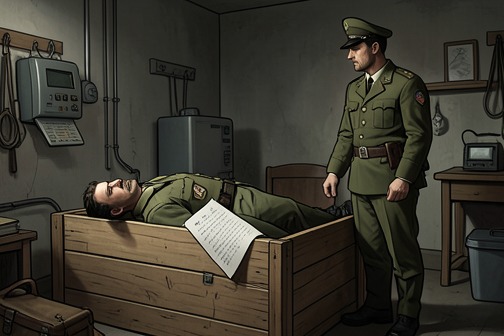
The [Assassination of Herberts Cukurs](entity:event-recall-event-27e5a6bb81c0) was a Mossad killing in Montevideo in February 1965. In the book’s account, its significance extends beyond the death of a Nazi war-crimes suspect: news of the killing sharpened [Josef Mengele](entity:character-recall-character-josef-mengele-a0cc1adb6ff1)’s fear that he, too, could be found, and changed the precautions he took to evade capture.
## Cukurs and the Killing
[Herberts Cukurs](entity:character-recall-character-herberts-cukurs-51d3578a5663) was a famous aviator associated with grave crimes against Jews during the Holocaust. In February 1965, his corpse was found in a crate in Montevideo. The account identifies the killers as a Mossad commando unit calling itself “those who will never forget.” It describes the killing as an execution carried out by the group, rather than a judicial proceeding.
A typed verdict had been pinned to the body. It presented the killing as punishment for Cukurs’s alleged personal responsibility for the deaths of 30,000 people and for the cruelty of his crimes. The document was the commando’s own declaration, not the outcome of a court hearing; its presence made the body a vehicle for a public claim of retribution as well as evidence of the killing.
## The Effect on Josef Mengele
Cukurs’s death was especially consequential because Josef Mengele regarded him as a friend. When Mengele learned what had happened, he became more vigilant. He acquired additional dogs and more powerful binoculars, and spent longer periods watching the countryside from his lookout tower. The killing turned the possibility of capture into a more immediate presence in his daily routine.
One night, lights approached his property. Mengele armed himself and prepared for a possible arrival by pursuers, but his fear proved misplaced: the visitor was Roberto, returning from an evening out with friends. The episode shows how Cukurs’s death fed into Mengele’s suspicions even when an ordinary event could account for what he saw. His fear had practical consequences, but it also shaped how he interpreted uncertain signs around him.
## Secrecy and Significance
Mengele also tightened the security of his correspondence with [Germany](entity:location-recall-location-a3c24dd56e42). He relied on initials and intermediaries, routing sealed letters through a Swiss post-office box or, less often, a family friend in Augsburg; [Hans Sedlmeier](entity:character-recall-character-83823209a29b) retrieved and forwarded them. Mail intended for Mengele in [Brazil](entity:location-recall-location-ff48c498ec8a) went to a post-office box under [Gerhard](entity:character-recall-character-gerhard-038684622c06)’s name, and Mengele switched from handwriting to a typewriter because his distinctive script could identify him. The account thus links the assassination not only to heightened physical surveillance but also to more deliberate concealment of his communications.
The episode places Cukurs’s killing within the wider postwar pursuit of Nazi fugitives while keeping its immediate consequences particular: the death of a man Mengele knew altered the behavior of a fugitive already living under threat of discovery. For Mengele, Cukurs’s fate was a warning that the danger was not merely a matter of distant rumor; it prompted concrete changes in how he watched, moved, and communicated.
Event 28
Frankfurt Auschwitz Trial Proceedings
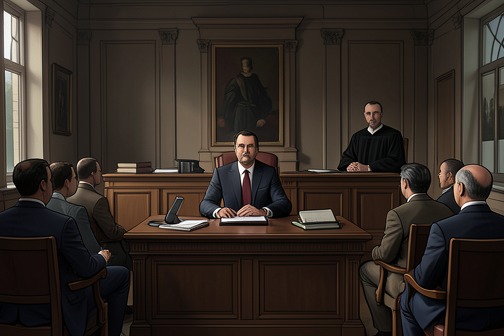
The [Frankfurt Auschwitz Trial Proceedings](entity:event-recall-event-044628fd1509) placed testimony about crimes at [Auschwitz](entity:location-recall-location-auschwitz-5b34fe0799d2) before a West German court and brought [Josef Mengele](entity:character-recall-character-josef-mengele-a0cc1adb6ff1)’s name repeatedly into public discussion. Their significance in the account is both judicial and personal: while survivors testified to his actions, Mengele continued to defend himself as an obedient servant of German science, and the proceedings became a direct source of conflict in the household sheltering him.
## Background and the record of Auschwitz
The proceedings belong to a wider, slow-moving effort to pursue former camp personnel. Earlier, [Hermann Langbein](entity:character-recall-character-c8355742e994) had assembled evidence against Mengele and pressed West German authorities to act. The response was divided: most judges declined to proceed, but a prosecutor in [Freiburg im Breisgau](entity:location-recall-location-35ea022d2af8), where Mengele had last been registered, issued an arrest warrant on 25 February 1959 on multiple counts of premeditated murder and attempted murder. This history shows the difference between the existence of evidence and the willingness or ability of institutions to turn it into prosecution.
The crimes under discussion had also been recorded outside the courtroom. [Miklós Nyiszli](entity:character-recall-character-bb2a0f1377d7), a Jewish doctor forced to assist Mengele at Auschwitz, later published an account of his experience, first in Hungary in 1946 and in France in 1961. He described Mengele’s selections of deported Hungarian Jews and experiments on twins and other prisoners. Nyiszli’s account documents the camp practices that formed the background to public testimony; the evidence here does not establish that his book itself was presented as evidence in the [Frankfurt](entity:location-recall-location-b414a8b33692) proceedings.
## Testimony and public confrontation
By Easter Monday 1964, the Auschwitz proceedings had been taking place in Frankfurt for several months. Reports from the trial regularly mentioned Mengele, and survivors testified to his crimes and cruelty. The book gives no detailed transcript of those Frankfurt testimonies, but makes clear that they carried his name beyond the clandestine networks and private suspicions that had surrounded him in South America.
The proceedings entered the Stammer household through the radio. [Geza Stammer](entity:character-recall-character-geza-stammer-936dd5c8ae02) taunted Mengele, telling him that he should face justice in [Germany](entity:location-recall-location-a3c24dd56e42) rather than claim that he had merely done his duty. The taunt struck at a subject that had been made taboo in the household: Auschwitz was not to be discussed. Mengele seized Geza by the throat before the family intervened and separated them. The trial thus turned public testimony into a private confrontation, challenging the fugitive’s ability to control both the language used about his past and the conditions of his refuge.
## Conflict, concealment, and the limits of pursuit
The household confrontation did not lead to Mengele’s immediate arrest or removal. Instead, [Gerhard](entity:character-recall-character-gerhard-038684622c06) was called in to negotiate a settlement between the Stammers and Mengele. Plans to transfer Mengele to an Arab country were considered but abandoned as too complicated. The family’s financial interests also mattered: the Mengele firm feared that an arrest would damage its reputation, and the Stammers were offered compensation to continue hosting him. The trial exposed the crimes, but the consequences described here included renewed arrangements for concealment rather than an immediate judicial reckoning.
The proceedings also unfolded amid uneven official pursuit. West German authorities had been slow to send fingerprints to South American embassies and did not devote special agents or spies to the search. In 1964, while attention was focused on the Frankfurt proceedings, the government increased diplomatic pressure over Mengele’s Paraguayan citizenship and publicized its belief that he lived near the tri-border region and travelled to [Brazil](entity:location-recall-location-ff48c498ec8a). [Paraguay](entity:location-recall-location-780df61f9f8b)’s president, Alfredo Stroessner, rejected West German pressure and invoked national sovereignty. The courtroom’s scrutiny and the diplomatic campaign therefore advanced alongside persistent obstacles to arrest and extradition.
## Aftermath and continuing testimony
[Fritz Bauer](entity:character-recall-character-fritz-bauer-35daf90158d4), the prosecutor identified in the account as Mengele’s most dangerous antagonist, died on 1 July 1968. The news reached Mengele through [Hans Sedlmeier](entity:character-recall-character-83823209a29b), and he took it as the loss of a central pursuer. The book does not say that [Bauer](entity:character-recall-character-7c33a7045b6c)’s death ended the proceedings; it marks instead how closely Mengele followed the people and institutions capable of holding him to account.
The Frankfurt proceedings should be distinguished from the separate mock trial held at [Yad Vashem](entity:location-recall-location-9a3f0eb52346) in [Jerusalem](entity:location-recall-location-695056030a63) in February 1985. There, survivors of Mengele’s experiments testified over three days, renewing demands that he be found and tried. The later proceeding shows how survivor testimony continued to shape public memory and pressure for action, while also underscoring that the earlier Frankfurt trial had not itself brought Mengele before a court.
Event 29
Six-Day War
The [Six-Day War](entity:event-recall-event-f0b067804dfd) enters the narrative through [Josef Mengele](entity:character-recall-character-josef-mengele-a0cc1adb6ff1)’s reaction to it from exile in [Brazil](entity:location-recall-location-ff48c498ec8a). Watching the conflict unfold on television, he interprets [Israel](entity:location-recall-location-e1a1566e26c9)’s victories not as distant news but as another sign of a world turning against the political order he still clings to; the war compounds the fear and disillusionment already stirred by the arrest of [Franz Stangl](entity:character-recall-character-franz-stangl-ee239e5f91f5).
## Background and Context
In February, Brazilian authorities arrested Franz Stangl, the former commandant of Sobibor and Treblinka, at his home in [São Paulo](entity:location-recall-location-a1461a49edde) and swiftly extradited him to [West Germany](entity:location-recall-location-eebe13eb20e5). When the news became public, [Gerhard](entity:character-recall-character-gerhard-038684622c06) hurried to [Serra Negra](entity:location-recall-location-f1d84ff83ef0) to tell Mengele that he was considering speaking in Stangl’s defence. Mengele calmed him and urged him to curb his neo-Nazi activities around São Paulo, which could attract police attention and lead investigators to Mengele himself.
## The War Through Mengele’s Eyes
In June, Mengele followed the Six-Day War daily on a television set that [Geza Stammer](entity:character-recall-character-geza-stammer-936dd5c8ae02) had given his sons a few weeks earlier. He regarded [Gamal Abdel Nasser](entity:character-recall-character-45c3188d0f9d) as treacherous and compared him unfavourably with [Juan Perón](entity:character-recall-character-a454ccbc4368). The narrative presents Mengele as unable to accept the defeat of the Arab armies or Israel’s gains in [Jerusalem](entity:location-recall-location-695056030a63), the Golan Heights, Sinai, and Palestine. His response exposes how he filtered events through old political loyalties rather than confronting the realities of the changing world around him.
## Consequences and Significance
The conflict adds to the torment Mengele already feels over Stangl’s capture. The two events are linked in the account by their effect on his sense of security: a prominent former camp commandant has been seized and extradited, while the war’s outcome confirms, for Mengele, that the political landscape is shifting beyond his control. The Six-Day War is therefore presented less as a military chronicle than as a measure of his isolation and his inability to make sense of a world that no longer belongs to him.
Event 30
Warsaw Pact invasion of Czechoslovakia
The [Warsaw Pact invasion of Czechoslovakia](entity:event-recall-event-4ff64764393c) appears in the book not as a battlefield narrative but as a television image filtered through [Josef Mengele](entity:character-recall-character-josef-mengele-a0cc1adb6ff1)’s political convictions. In 1968, he praises the Soviet intervention in Prague while compelling the Stammer family to watch the news with him, making the event part of a domestic ritual of ideological commentary.
## The Intervention on Television
Mengele watches the evening news in slippers and wrapped in a blanket, with the dog Cigano asleep on his knees. He requires [Gitta Stammer](entity:character-recall-character-gitta-stammer-c78940b5388e) and the boys to watch alongside him. In that setting, he celebrates what he presents as the Soviets’ decisive intervention in Prague. The book gives no account of the invasion’s military course or its political aftermath; its focus is the way the news is received in the household.
## Mengele’s Political Commentary
His praise of the intervention forms part of a wider stream of judgments delivered during the same broadcasts. He extols [Brazil](entity:location-recall-location-ff48c498ec8a)’s military dictators, welcomes the Soviet action in Prague, and rejoices at the [United States](entity:location-recall-location-5d55e9152db1)’ difficulties in Vietnam, while mocking the student uprisings of 1968. His anger also turns to German political leaders, whom he condemns as weak or disloyal. The juxtaposition places his approval of Soviet action alongside his hostility to American influence and student protest, without presenting it as a considered account of the invasion itself.
## Place in the Narrative
The episode shows how international events enter the book through the private routines of Mengele’s exile. The television is not simply background: he uses the family’s shared viewing to deliver judgments, while the boys’ amusement at his insults registers a contrast between his certainty and the household’s response. The invasion is therefore significant here chiefly as a point in his commentary and as part of the political atmosphere he imposes on the Stammers.
Event 31
Protests of 1968
The [Protests of 1968](entity:event-recall-event-1968-067854e272a1) appear in the narrative through [Josef Mengele](entity:character-recall-character-josef-mengele-a0cc1adb6ff1)’s nightly television viewing, where news of student unrest becomes a measure of how far the world has moved from the authoritarian order he still defends. He makes [Gitta Stammer](entity:character-recall-character-gitta-stammer-c78940b5388e) and the boys watch with him, turning the household’s evening ritual into a stage for his denunciation of protest and his rejection of the changes it represents.
## Background: A World in Upheaval
By September 1967, Mengele already senses that he has lost his place in the world. He watches young Germans challenge discipline, hierarchy, and authority, and sees hippies in San Francisco and pilgrims travelling to Kathmandu. He is also disturbed by white people in the [United States](entity:location-recall-location-5d55e9152db1) defending Black people. These scenes matter to him not as separate political developments but as signs that the inherited order he values is coming apart.
His dismay takes shape against the record of the authority he once exercised. At [Auschwitz concentration camp](entity:location-recall-location-3c4eaac5dda5), he subjected twins and people with dwarfism to medical procedures and had them killed; their organs were sent to [Otmar von Verschuer](entity:character-recall-character-otmar-von-verschuer-c3db6a00b1f4)’s institute in Berlin for research. In 1944, despite [Germany](entity:location-recall-location-a3c24dd56e42)’s deteriorating military position, he continued working over dossiers and laboratory research. The care he devoted to collecting those files stands in stark contrast to the human beings reduced to research subjects within them.
## The Protests on Television
For the Stammer household, evening news becomes a recurring ritual. Wrapped in a blanket with Cigano on his knees, Mengele insists that Gitta Stammer and the boys listen as he comments on events. In 1968 he ridicules the student uprisings as the confusion of anarchy with freedom. His reaction is not detached criticism: he treats the protests as evidence of a wider collapse of discipline and authority.
The surrounding news gives his position a sharp political contrast. He praises [Brazil](entity:location-recall-location-ff48c498ec8a)’s military dictators and the Soviet intervention in Prague, while condemning what he sees as materialism and individualism imported from the United States. He also complains about political leaders in Germany. His objections to the students therefore belong to a broader defense of forceful rule and inherited hierarchy, not simply to irritation at youthful dissent.
## Ideology and Self-Justification
Mengele’s response to protest is sharpened by the way he understands his own past. When confronted by [Rolf](entity:character-recall-character-9bf3df2a7266), he presents his work at [Auschwitz](entity:location-recall-location-auschwitz-5b34fe0799d2) as military duty in the service of German science and claims that his selections saved lives. He explains selection through a harsh analogy to wartime triage and the survival of the strongest. The account exposes the assumptions beneath his public contempt for protest: he treats hierarchy and the power to classify others as natural principles, rather than as choices open to challenge.
That self-image had already met institutional repudiation. In early 1964, the universities of [Frankfurt](entity:location-recall-location-b414a8b33692) and [Munich](entity:location-recall-location-d277927d86b1) withdrew his doctoral degrees in medicine and anthropology because of his crimes at Auschwitz and his violation of the [Hippocratic Oath](entity:rule-recall-rule-hippocratic-oath-e231dde7d5f6). The later protests do not cause this censure, but their challenge to inherited authority places Mengele’s insistence on his own legitimacy within a world increasingly unwilling to accept it.
## Significance in the Narrative
The protests are presented less as a street-level chronicle than as a confrontation mediated by the television screen. The narrative gives their force through the gulf between the young people demanding explanations from their fathers and Mengele, who responds by forcing his household to hear his own verdict. His contempt cannot restore the order he longs for; it instead makes visible his estrangement from contemporary society and the authoritarian ideas that bind his defense of himself to his rejection of dissent.
Event 32
Death of Mengele
[Josef Mengele](entity:character-recall-character-josef-mengele-a0cc1adb6ff1)’s death came not in custody or before a court, but in the sea off [Brazil](entity:location-recall-location-ff48c498ec8a) on February 7, 1979. His companion [Wolfram Bossert](entity:character-recall-character-wolfram-bossert-db924b1140a8) tried to rescue him, yet he could not prevent the drowning. The ending closes Mengele’s fugitive life with a stark imbalance: his crimes were documented and his credentials repudiated, but he never faced justice for them.
## Crimes and the defense he offered
At [Auschwitz](entity:location-recall-location-auschwitz-5b34fe0799d2), Mengele subjected twins and dwarves to painful medical procedures and experiments in the camp’s Gypsy camp barracks. The procedures included blood tests, spinal taps, and transfusions between twins. For the comparative examination of their bodies, the twins were killed at the same time. Their organs were then sent to the [Kaiser Wilhelm Institute for Anthropology, Human Heredity and Eugenics](entity:organization-recall-organization-4978afc86af7) in Dahlem, Berlin, under packaging marked as urgent war material.
[Miklós Nyiszli](entity:character-recall-character-bb2a0f1377d7)’s account portrays Mengele continuing this work in the crematorium dissection room in autumn 1944, even though [Germany](entity:location-recall-location-a3c24dd56e42) had already lost the war. Mengele spent long hours examining specimens and reviewing dossiers. His attention to a minor grease stain on a dossier cover, which he had collected with conspicuous care, set the tidiness of his records beside the violence those records documented.
Years later, when challenged by [Rolf](entity:character-recall-character-9bf3df2a7266), Mengele described his actions as military duty in the service of German science. He claimed that selection had saved people able to work and that the twins had benefited from his research. His explanation recast killing as biological necessity and presented victims as instruments of a scientific cause; Rolf remained mystified by the argument.
## Repudiated credentials
Early in 1964, Mengele learned from a letter from Martha that the universities of [Frankfurt](entity:location-recall-location-b414a8b33692) and [Munich](entity:location-recall-location-d277927d86b1) had withdrawn his doctoral degrees in medicine and anthropology. The universities’ stated grounds were his violation of the Hippocratic oath and his murders at Auschwitz. The revocation formally repudiated the academic standing that had helped define his professional identity, while leaving him beyond the reach of a criminal judgment.
## The final day
On February 7, 1979, Mengele woke exhausted and acutely unwell. Despite back pain, he dressed and went down to the beach near the holiday home where he was staying. Bossert greeted him and offered him a place under a parasol, lemonade, and food. Mengele instead suggested walking along the shore. He seemed dazed and paid little attention to Bossert’s conversation.
After sitting on a rock, Mengele began speaking about ruins, his parents, and [Günzburg](entity:location-recall-location-d9821256f60f). He said he wanted to go home to end his days and complained of thirst and heat. The conversation offered a last glimpse of his attachment to home, but it did not turn into a reckoning with his victims or his past.
Mengele then went alone into the water and was carried farther out. When Bossert struggled through the waves to bring him back, Mengele was already dead. The sequence is described as a drowning, not as an encounter with pursuers or an act of legal accountability: his death came through an accident at the coast, with Bossert present but unable to save him.
## Aftermath and significance
Liselotte and the children responded to the news by calling him Uncle Pedro and saying that he was dead. The familiar family name sits uneasily beside the crimes for which he had never answered. The account concludes that Mengele died in Brazil without facing human justice or responding to his victims. His death ended the possibility of his capture and trial, but did not undo either the experiments or the institutional links through which their results had been circulated.
Event 33
1985 mock trial of Josef Mengele
The [1985 mock trial of Josef Mengele](entity:event-recall-event-1985-6f118933984f) at [Yad Vashem](entity:location-recall-location-9a3f0eb52346) turned survivors’ testimony into a public demand for justice, reviving an international manhunt for the [Auschwitz](entity:location-recall-location-auschwitz-5b34fe0799d2) doctor. Held forty years after the camp’s liberation, the proceeding made visible the gulf between Mengele’s postwar denials and the experiences of those who had survived his selections and experiments. Its testimony reached audiences around the world and prompted governments to intensify efforts to locate him.
## Background: a fugitive and a contested past
The trial came after years of uneven pursuit. In 1959, a court in [Freiburg im Breisgau](entity:location-recall-location-35ea022d2af8) issued an arrest warrant for Mengele on multiple counts of premeditated murder and attempted murder. Subsequent extradition efforts encountered delays and resistance: [Paraguay](entity:location-recall-location-780df61f9f8b) granted him citizenship, and President Alfredo Stroessner rejected West German pressure, invoking Paraguayan sovereignty. West German authorities later publicized that Mengele was believed to be in the tri-border region and to travel to [Brazil](entity:location-recall-location-ff48c498ec8a), but the diplomatic dispute did not secure his surrender. By the mid-[1960s](entity:time-recall-time-1960s-fa3d18a6c9cb), [West Germany](entity:location-recall-location-eebe13eb20e5) had eased pressure on the hunt.
Public attention to Nazi crimes had nevertheless grown. Books, documentaries, and the increasing popularity of The Diary of Anne Frank helped bring the extermination of European Jews before wider audiences. At the same time, the Dürer men’s club, associated with [Willem Sassen](entity:character-recall-character-ae62f029513e) and [Eberhard Fritsch](entity:character-recall-character-412fe7cad995), denied the scale and methods of the mass murder and promoted [Adolf Eichmann](entity:character-recall-character-adolf-eichmann-2d7ccb92d0d6) as a witness who could rehabilitate [Germany](entity:location-recall-location-a3c24dd56e42) and Nazism. Against this climate of denial, survivor testimony at Yad Vashem offered a direct challenge to the attempt to recast the crimes.
## The proceedings and the witnesses
On 27 January 1985, the fortieth anniversary of Auschwitz’s liberation, survivors gathered at the camp for a commemoration. Among them were twins, dwarves, and people with disabilities who had been subjected to Mengele’s experiments. They appealed publicly for governments to capture him. Most of the survivors then travelled from [Poland](entity:location-recall-location-8e143713a3f3) to [Israel](entity:location-recall-location-e1a1566e26c9); on 4 February, a mock trial opened at Yad Vashem’s Holocaust Memorial in [Jerusalem](entity:location-recall-location-695056030a63).
The tribunal brought together three figures associated with earlier efforts to confront Nazi crimes: the chief prosecutor from [Eichmann](entity:character-recall-character-588289c1f970)’s Jerusalem trial, Nazi-hunter [Simon Wiesenthal](entity:character-recall-character-simon-wiesenthal-4091b241cfc6), and the chief US military counsel at the Nuremberg war crimes trial. Over three consecutive days, former prisoners testified about their experiences as Mengele’s human subjects. Their accounts included experiments on twins and the treatment of mothers and newborns in the camp. The hearing gave individual witnesses the floor in a public forum, rather than allowing the fugitive’s conduct to remain an abstraction or a matter of his own account alone.
## Testimony against Mengele’s self-justification
The witnesses’ accounts stood in sharp contrast to the language Mengele used years later when his son [Rolf](entity:character-recall-character-9bf3df2a7266) confronted him in Brazil. Mengele described his Auschwitz work as a military and scientific duty, claiming that selection had saved prisoners able to work and that the twins owed their lives to his research. He also presented himself as a subordinate who had obeyed orders. The mock trial’s testimony placed that self-exculpating account beside survivors’ descriptions of the experiments and the camp’s violence, exposing the distance between his claimed purpose and their lived experience.
The proceeding also recalled the earlier account of [Miklós Nyiszli](entity:character-recall-character-bb2a0f1377d7), a Jewish doctor forced to assist Mengele and the camp’s [Sonderkommando prisoners](entity:character-recall-character-ba46e8a23e45). After surviving Auschwitz, Nyiszli recorded his experiences in a book first published in Hungary in 1946 and later in France in 1961. His account described Mengele’s work at the selection platform and in the laboratory, including experiments on twins. The 1985 witnesses thus joined an existing record of testimony, while bringing their own memories before a new generation of viewers.
## Public impact and renewed pursuit
The testimony was broadcast worldwide, and its repercussions were immediate. Before the hearing had ended, the US attorney general called for the complete file to be reviewed and demanded Mengele’s arrest. The [Simon Wiesenthal Center](entity:organization-recall-organization-e2f1edecbaa6) pressed for action after releasing a declassified American counterintelligence memorandum that claimed the [United States](entity:location-recall-location-5d55e9152db1) had held Mengele in 1947. That claim was incorrect, but it provoked public controversy over whether the United States had allowed him to escape and whether postwar authorities had made use of former Nazis.
The [Office of Special Investigations](entity:organization-recall-organization-f697df8b1c97), established by the Carter administration to pursue Nazi criminals in the United States, coordinated the investigation with the CIA, the National Security Agency, and the Department of Defense. On 8 February, Israel announced that it would resume the hunt and offered a reward of one million dollars. The Simon Wiesenthal Center and the Washington Times each added another million dollars, while Germany offered one million marks. The combined rewards placed Mengele’s capture at a value of $3.4 million. American, Israeli, and West German authorities coordinated their efforts and shared information as journalists and adventurers travelled to [Günzburg](entity:location-recall-location-d9821256f60f) and South America. The pursuit became a major media event, but the searchers did not know that they were hunting a ghost.
## Significance
The mock trial was a public reckoning, not a reported criminal judgment or arrest. Its force lay in assembling survivors’ testimony, placing Mengele’s conduct against his own postwar excuses, and translating remembrance into renewed demands for action. The international response demonstrated the growing reach of Holocaust memory in 1985; the continuing absence of Mengele from the courtroom also exposed the limits of publicity and coordinated pursuit. The survivors could make the crimes heard around the world, but the fugitive himself remained beyond the tribunal’s reach.
Event 34
Exhumation and identification of Josef Mengele's remains
The exhumation and identification of [Josef Mengele’s remains](entity:object-recall-object-josef-mengele-s-remain-3d5c80f978ac) in [Brazil](entity:location-recall-location-ff48c498ec8a) in 1985 transformed an uncertain manhunt into a forensic conclusion. Investigators traced his family’s concealed connections to a grave in [Embu das Artes](entity:location-recall-location-134e502e824b), where the skeleton had been buried under the name [Wolfgang Gerhard](entity:character-recall-character-056edb3817fb). Examination of physical features and comparison with photographs and records led specialists to identify the remains as Mengele’s; DNA tests confirmed their conclusion in 1992. The discovery settled the question of his identity, while exposing how people close to him had helped preserve his concealment.
## From concealed correspondence to the grave
The investigation gathered force after [Hans Sedlmeier](entity:character-recall-character-83823209a29b), who had continued sending money to Mengele, disclosed that fact during a dinner in the Black Forest in autumn 1984. A listener reported it to the police. On 10 May 1985, a German prosecutor told American and Israeli partners that a search of [Sedlmeier](entity:character-recall-character-sedlmeier-e2ba4efe89c9)’s home was planned. This time, [Günzburg](entity:location-recall-location-d9821256f60f) police did not warn the person under investigation.
At the end of May, police searched Sedlmeier’s villa. In his wife’s dressing room they found an address book, coded telephone numbers, and photocopied correspondence involving Mengele, [Wolfram Bossert](entity:character-recall-character-wolfram-bossert-db924b1140a8), and the Stammers. One of Bossert’s letters reported Mengele’s death. Sedlmeier declined to cooperate and was placed under house arrest while investigators worked through the address book. Its information led them to Brazil.
[São Paulo](entity:location-recall-location-a1461a49edde) police then kept the Bossert and Stammer families under continuous surveillance for four days, but did not find Mengele. On 5 June, officers raided the Bosserts’ home at dawn. A dresser held keepsakes and recent photographs of the older, moustachioed man, evidence of the family’s connection to him. Bossert disclosed that Mengele was dead and buried in Embu cemetery, in a vault under the name Wolfgang Gerhard.
The account from [Gitta Stammer](entity:character-recall-character-gitta-stammer-c78940b5388e) was less direct. The following day, she recognized the man in a photograph as Peter Hochbichler, the Swiss man who had managed the family’s farms for a long time, and said that [Gerhard](entity:character-recall-character-gerhard-038684622c06) had introduced them. She denied knowing anyone named [Josef Mengele](entity:character-recall-character-josef-mengele-a0cc1adb6ff1). Her husband, [Geza Stammer](entity:character-recall-character-geza-stammer-936dd5c8ae02), was not questioned because he was on a cruise in Asia. These different responses left investigators with a grave to examine, but also with continuing reasons to scrutinize the family’s account.
## The exhumation and competing interpretations
News of the discovery reached the press before the identification was settled. On 6 June, reporters and photographers gathered around the police and the Bosserts as officials exhumed the contents of Gerhard’s grave in Embu das Artes. The coffin was brought up and opened, exposing the skeleton. The public scene made the discovery appear dramatic, but the central question remained evidentiary: whether the bones were actually those of Mengele.
Scepticism had a history. The Israelis and the Klarsfelds questioned why the family had kept silent for six years and why the information had emerged when it did. They suspected a further deception that might allow Mengele to remain free. [Simon Wiesenthal](entity:character-recall-character-simon-wiesenthal-4091b241cfc6) also withheld belief. By then, reports had declared Mengele dead seven times, in places ranging from the Russian front and [Paraguay](entity:location-recall-location-780df61f9f8b) to Brazil, [Bolivia](entity:location-recall-location-25e70c7ad017), and Portugal. The repeated false or unverified reports made announcement itself inadequate proof.
## Forensic comparison and confirmation
Specialists assembled several kinds of identifying evidence rather than relying on the name attached to the grave. They determined the skeleton’s blood group, recovered hair from the head and moustache, took a fingerprint, and measured the bones and the gap between the upper front teeth. They also examined the vertebrae and femurs, a hole in the left cheekbone, and the prominent forehead. These observations were compared with photographs of Mengele as a young and an older man.
The investigators also consulted Mengele’s SS file, which recorded a pelvic fracture after a motorcycle accident at [Auschwitz](entity:location-recall-location-auschwitz-5b34fe0799d2). That prior record offered a further point of comparison with the skeleton. The details did not all have the same identifying force in isolation; together, the physical examination, photographs, and recorded medical history formed the basis for the specialists’ assessment. On 21 June 1985, forensic pathologists at police headquarters in São Paulo announced that, to a reasonable degree of scientific certainty, the remains from Embu were Josef Mengele’s.
The conclusion was subsequently reinforced by genetic testing. In 1992, DNA tests confirmed the experts’ opinion. [Germany](entity:location-recall-location-a3c24dd56e42), [Israel](entity:location-recall-location-e1a1566e26c9), and the [United States](entity:location-recall-location-5d55e9152db1) then definitively closed the case. The progression—from a grave under an assumed name, through an initially contested examination, to a forensic conclusion and genetic confirmation—gave the identification a strength that earlier reports of Mengele’s death had lacked.
## Family disclosure and the aftermath
The investigation also prompted [Rolf](entity:character-recall-character-9bf3df2a7266) to break his silence. He considered selling his father’s letters and notebooks, along with photographs from his trip to Brazil, to Stern magazine, but instead decided to give them to Bunte. Proceeds from sales of the issue were to go to associations of concentration-camp survivors. Its 18 June cover showed Mengele in old age, wearing a high-collared shirt and straw hat; the accompanying report stated that his family had known where he was hiding and had supported him financially.
Rolf confirmed in a brief statement that his father had died in Brazil in 1979 and expressed sympathy to the victims and their loved ones. He said he had withheld the death out of consideration for those who had helped Mengele. He did not address his father’s atrocities. Dieter, [Karl-Heinz](entity:character-recall-character-17192b5754ec), and Sedlmeier likewise maintained silence. The identification therefore resolved the question of the body without producing a full public account from the circle that had sheltered him.
Mengele’s remains were stored in a cupboard at São Paulo’s Legal Medical Institute, and his family did not claim them. He was left without a grave. The identification ended the official search, but its closing image was not a burial or a family acknowledgment: it was an unclaimed set of remains, made identifiable through evidence after years of concealment.
Event 35
Herero and Namaqua Genocide
The [Herero and Namaqua Genocide](entity:event-recall-event-02a83027dc80) is invoked as part of the history behind [Eugen Fischer](entity:character-recall-character-eugen-fischer-d6dbb807c7bd), whom the book identifies as a participant in the genocide and a celebrated theorist of eugenics. Rather than recounting the event’s chronology or particulars, the passage uses Fischer’s role to connect colonial violence, racial ideology, and the later evasion of accountability by influential academics.
## The Event in the Book
The account names Namibia as the setting of the genocide but supplies no date, description of specific acts, or account of the Herero and Namaqua people’s experience. Its focus is instead Fischer’s career and the contrast between his participation in the crime and his later standing in German intellectual life.
## Eugen Fischer’s Role
Fischer is described as a celebrated eugenics theorist and an inspiration to [Hitler](entity:character-recall-character-943a651bff95). The passage states that he took part in the Herero and Namaqua Genocide before retiring to [Freiburg im Breisgau](entity:location-recall-location-35ea022d2af8). In this framing, the genocide is not an isolated biographical detail: it establishes the violent history behind the ideas with which Fischer was associated.
## Postwar Contrast and Narrative Significance
The book places Fischer’s later respectability beside [Josef Mengele](entity:character-recall-character-josef-mengele-a0cc1adb6ff1)’s reflection on how his mentors had extricated themselves from their pasts. Fischer published memoirs, was made an honorary member of the [German Anthropological Society](entity:organization-recall-organization-fbe86b0caf1d), and was not prosecuted. The passage thus makes the genocide part of a broader account of how racial doctrine and participation in atrocity could coexist with postwar professional recognition and impunity.